Playa Herradura, Costa Rica
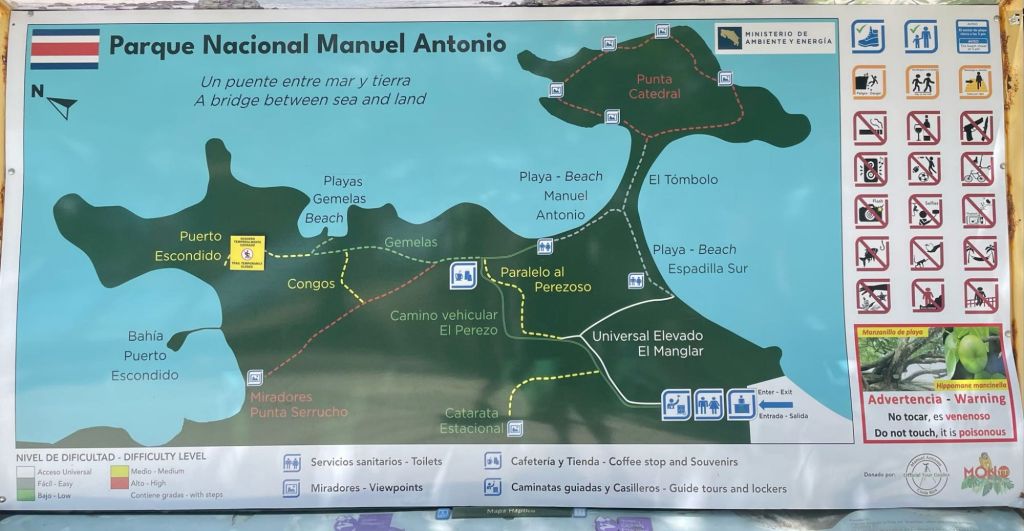
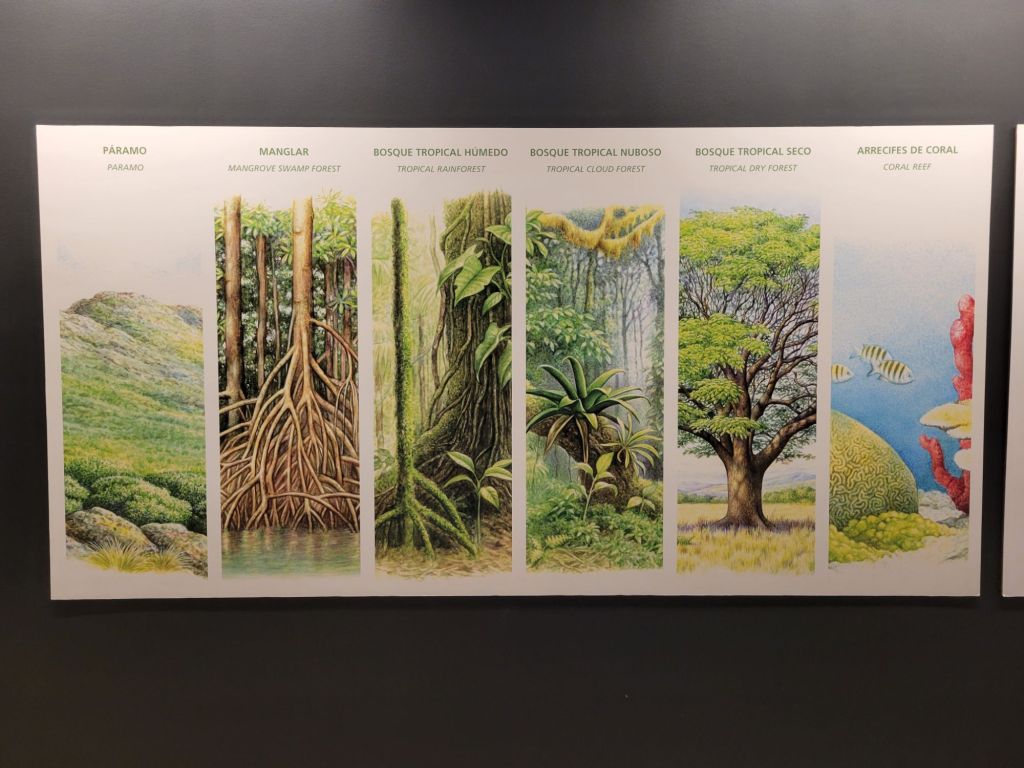
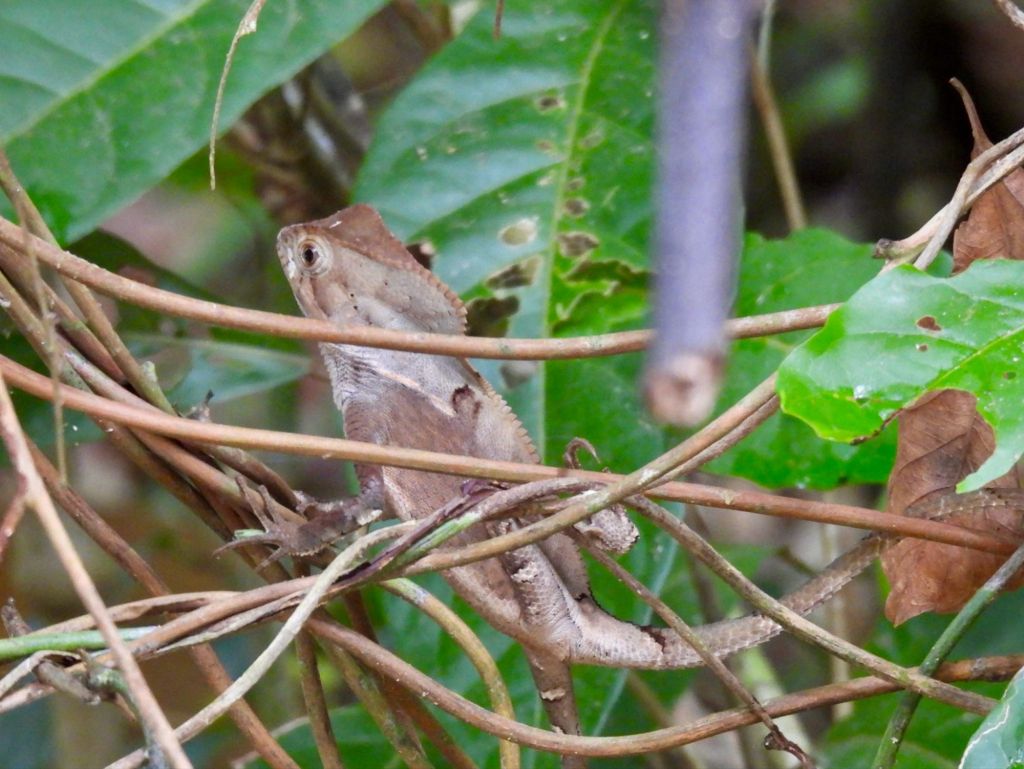
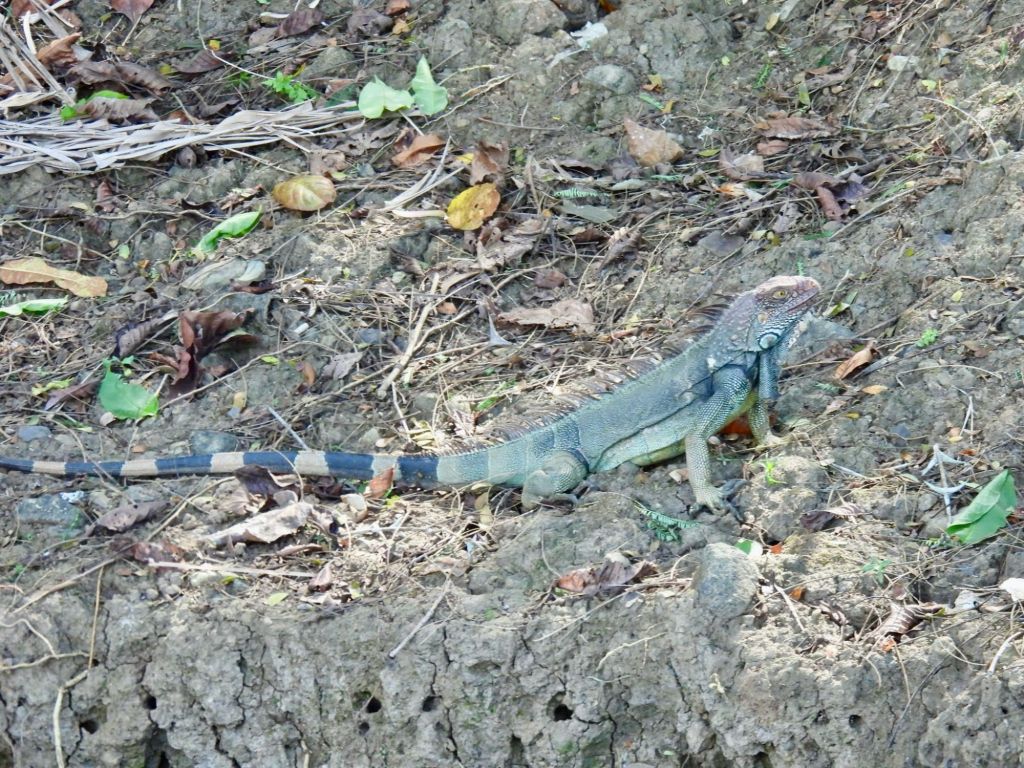
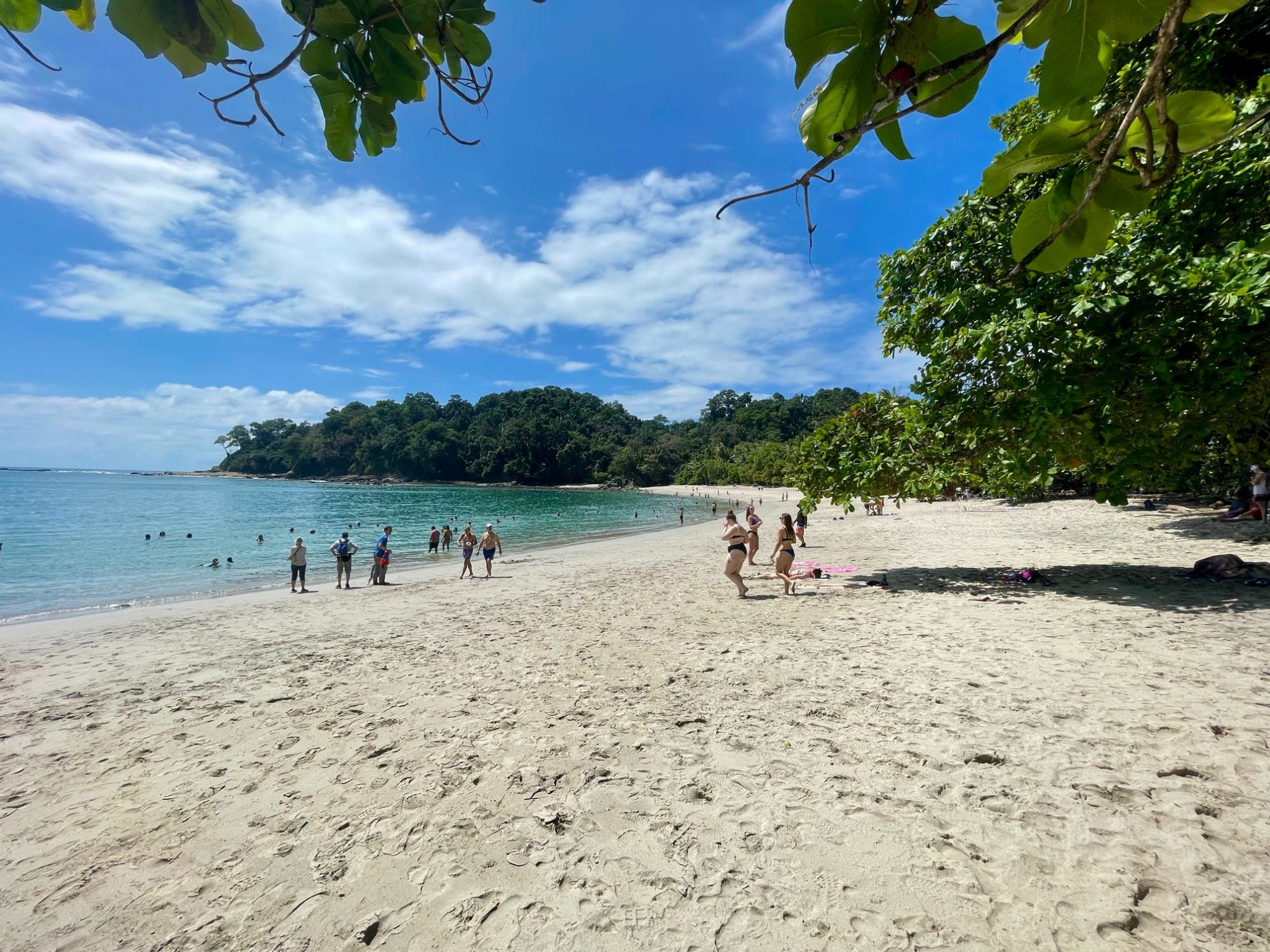
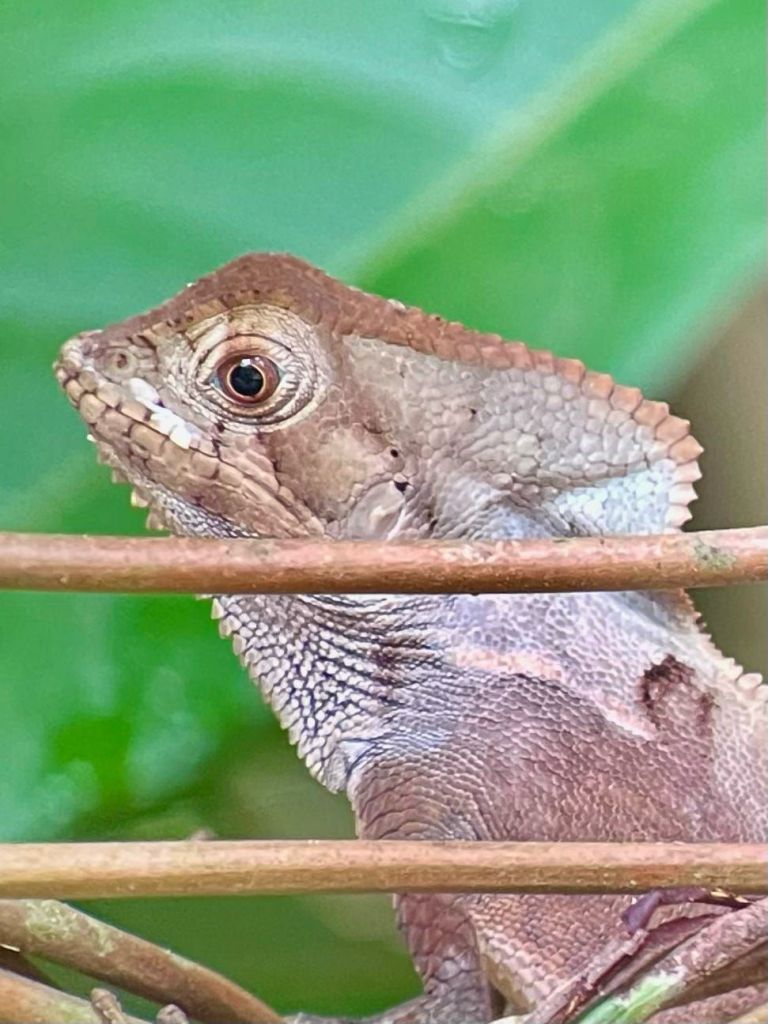
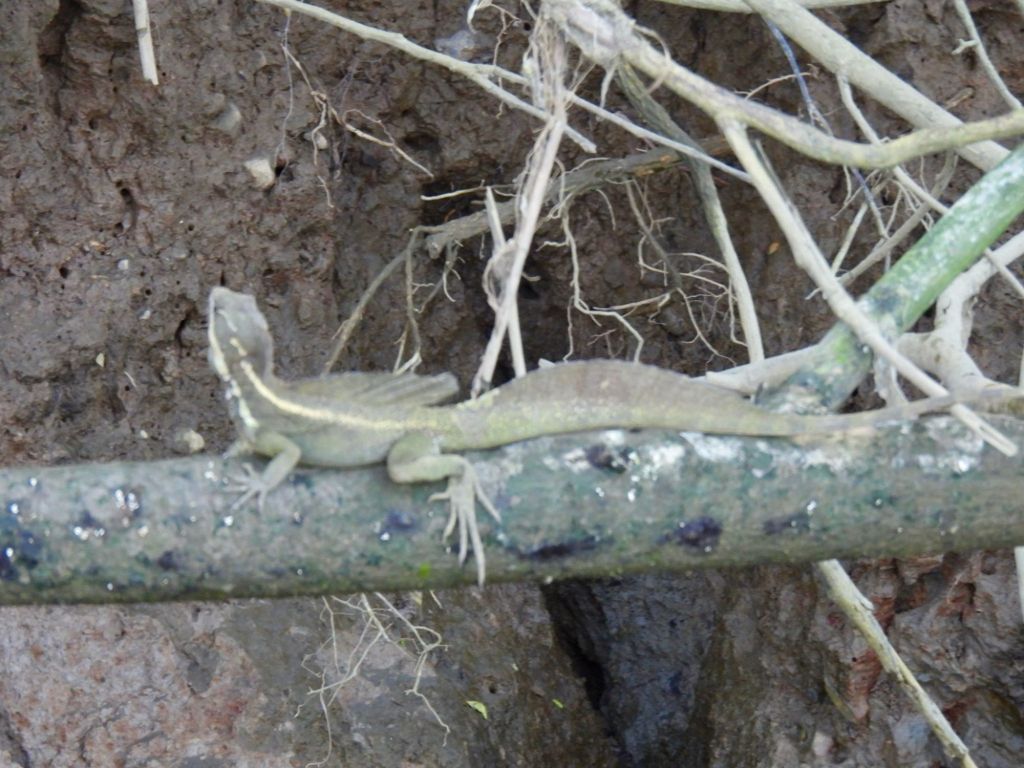
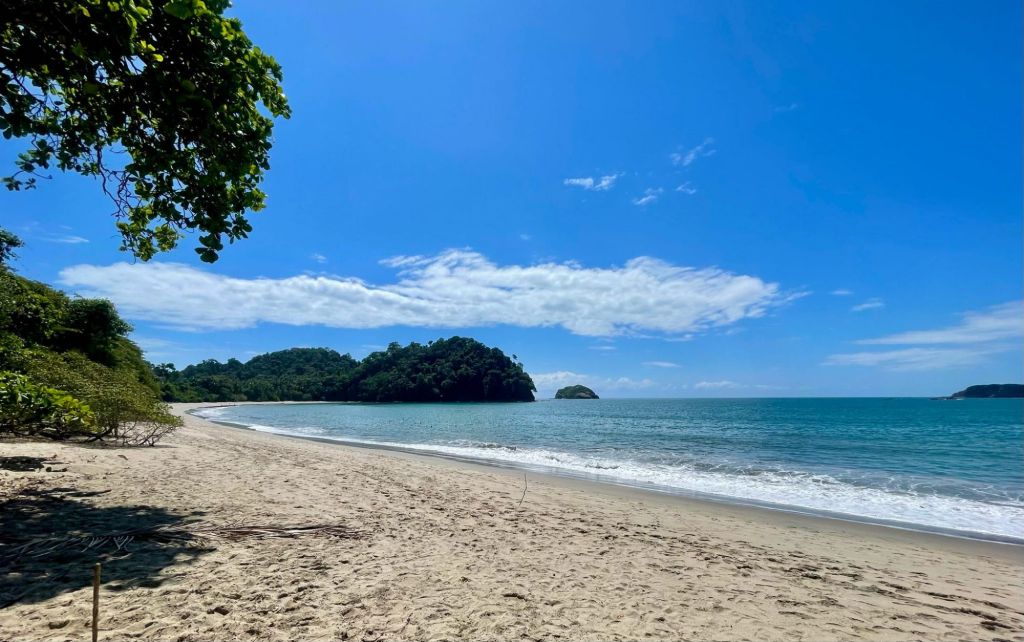
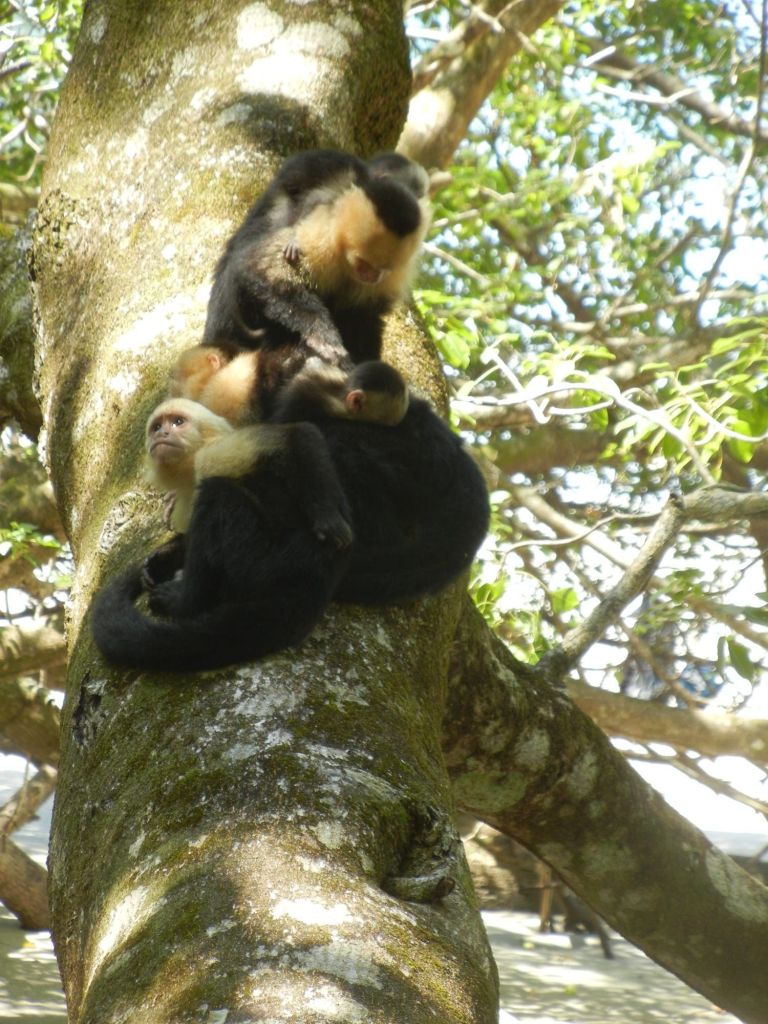
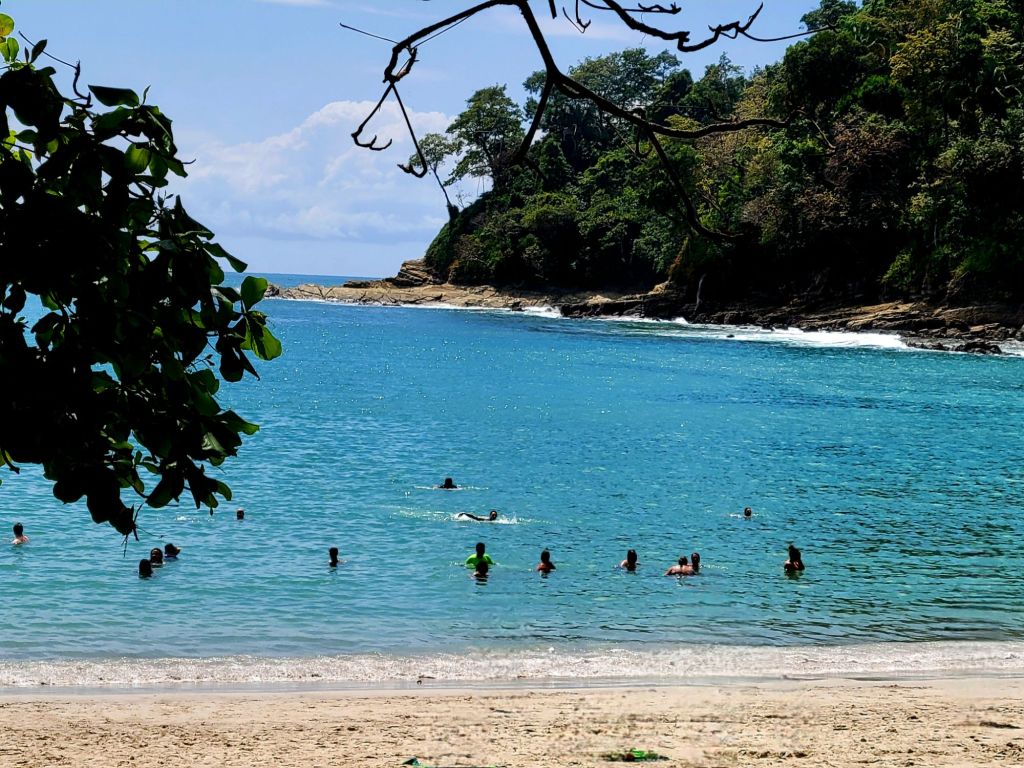
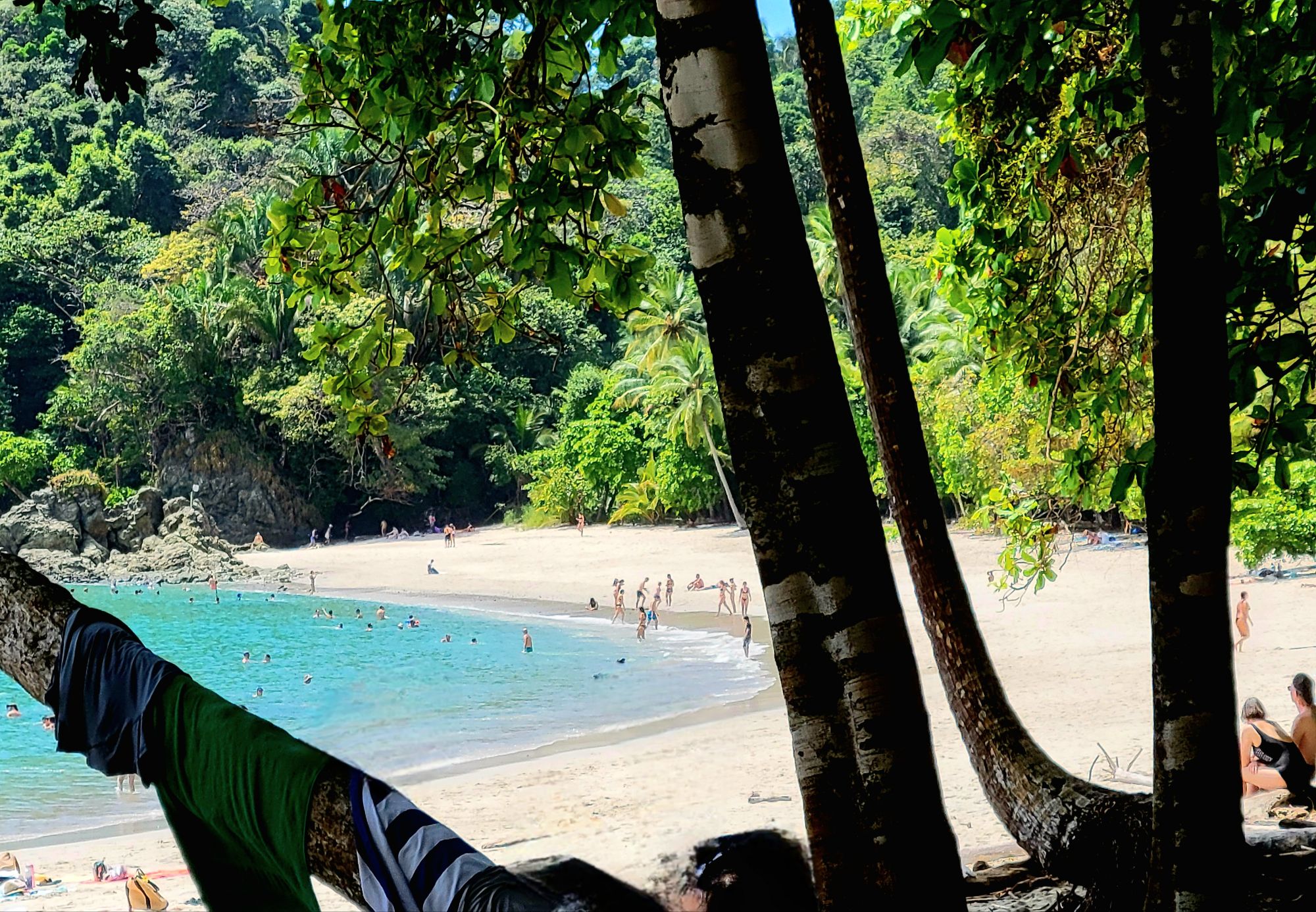
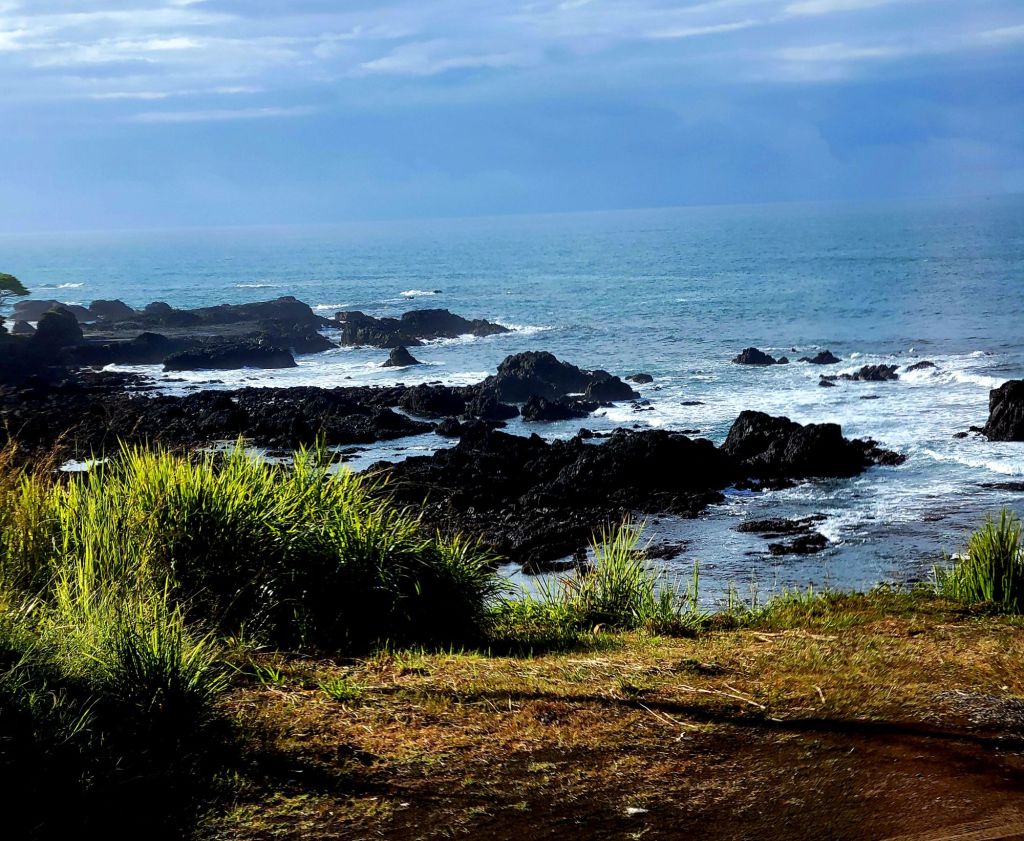
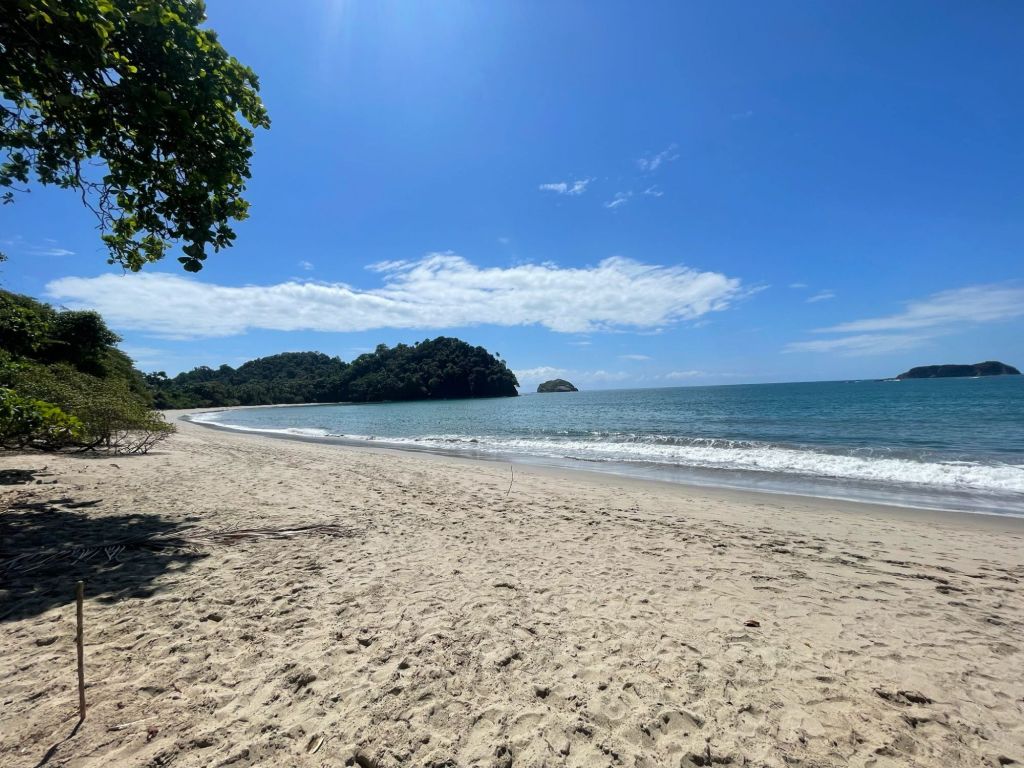
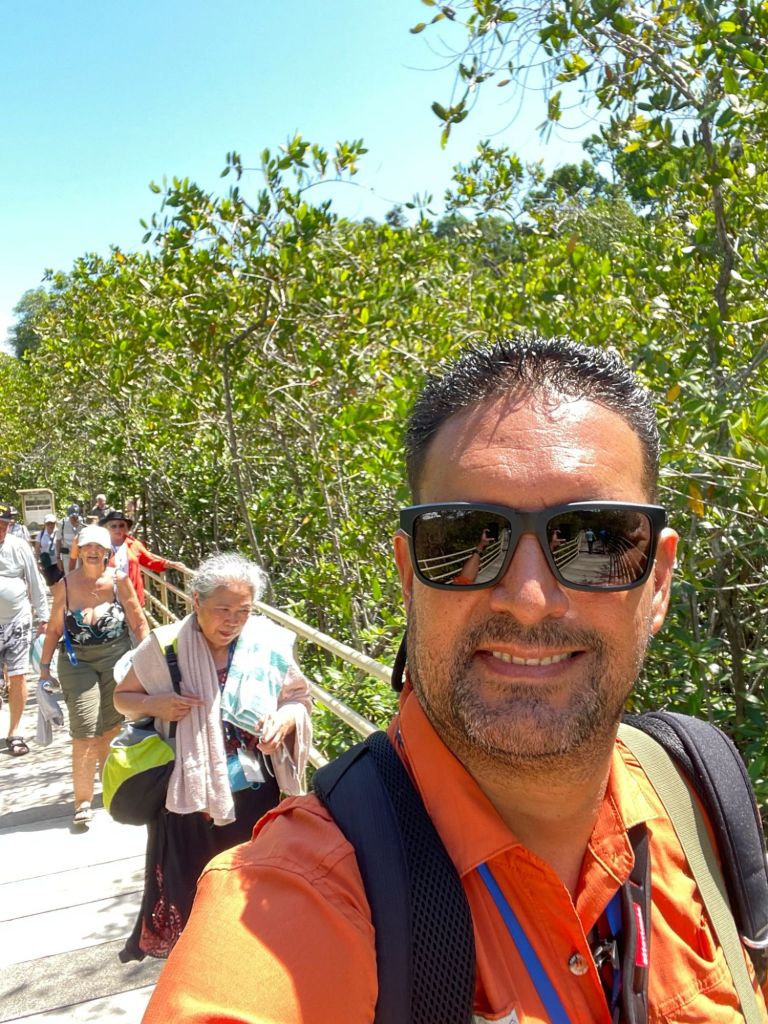
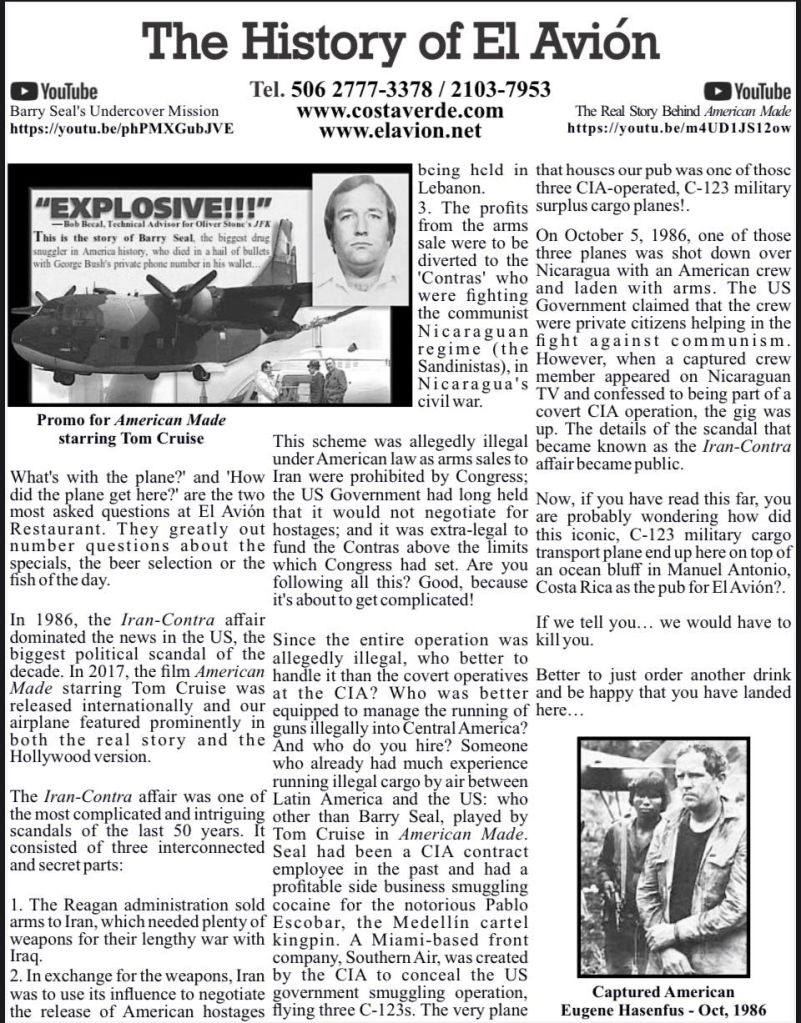
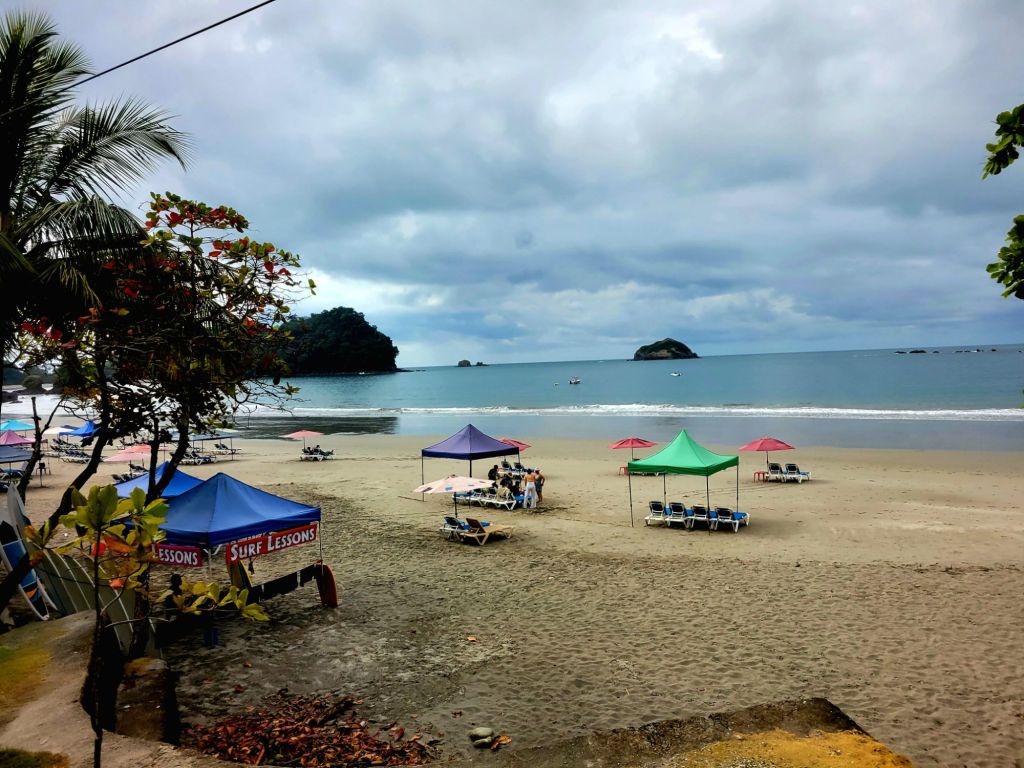
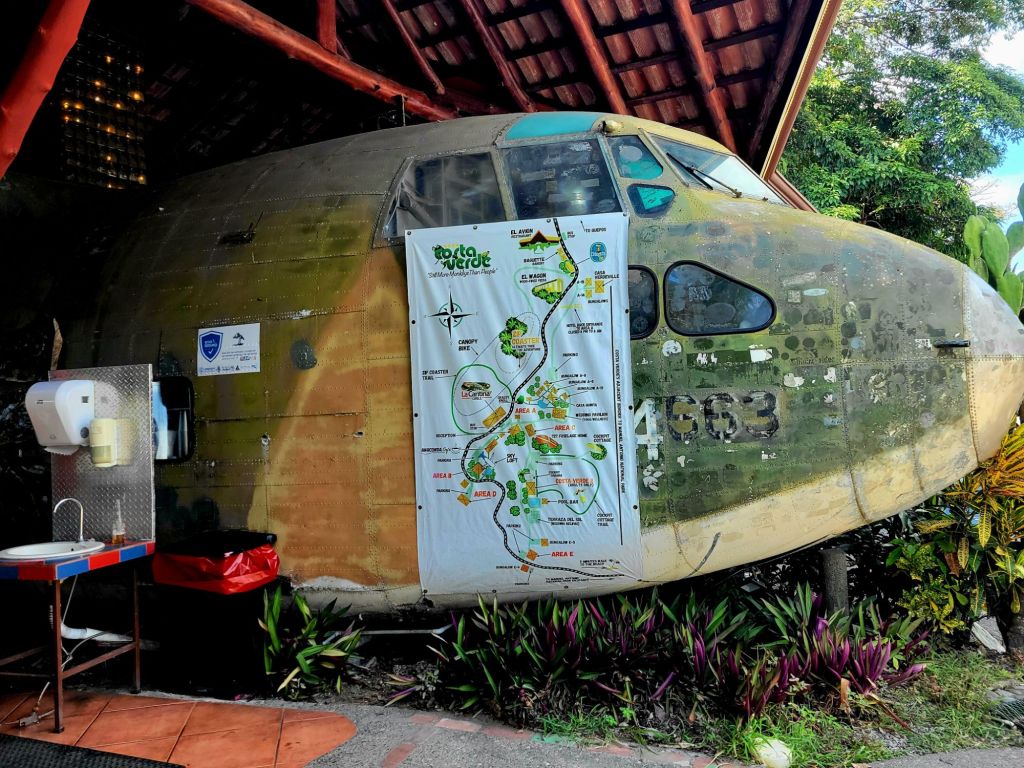
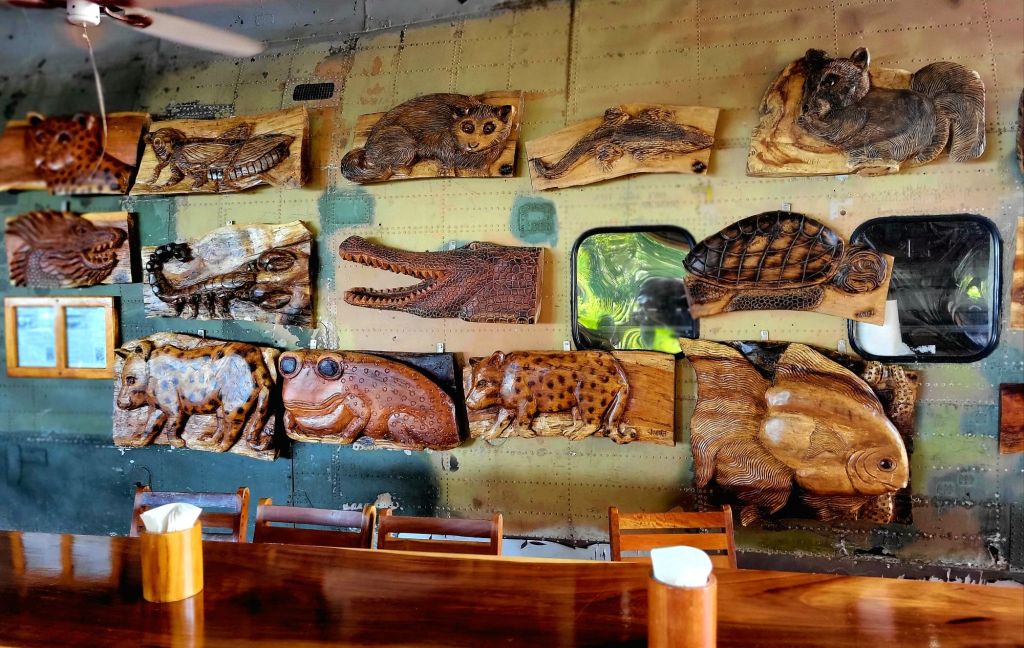
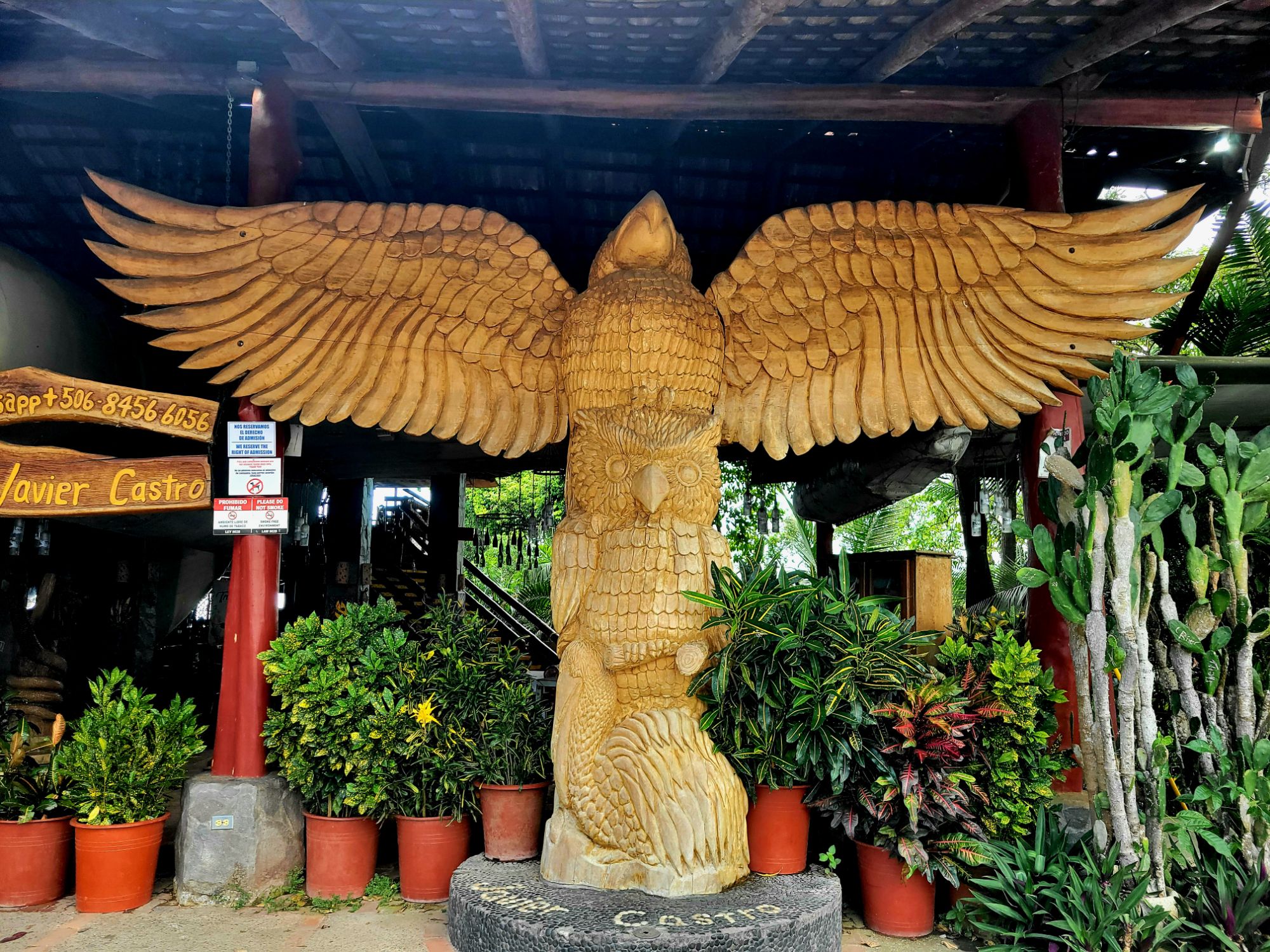
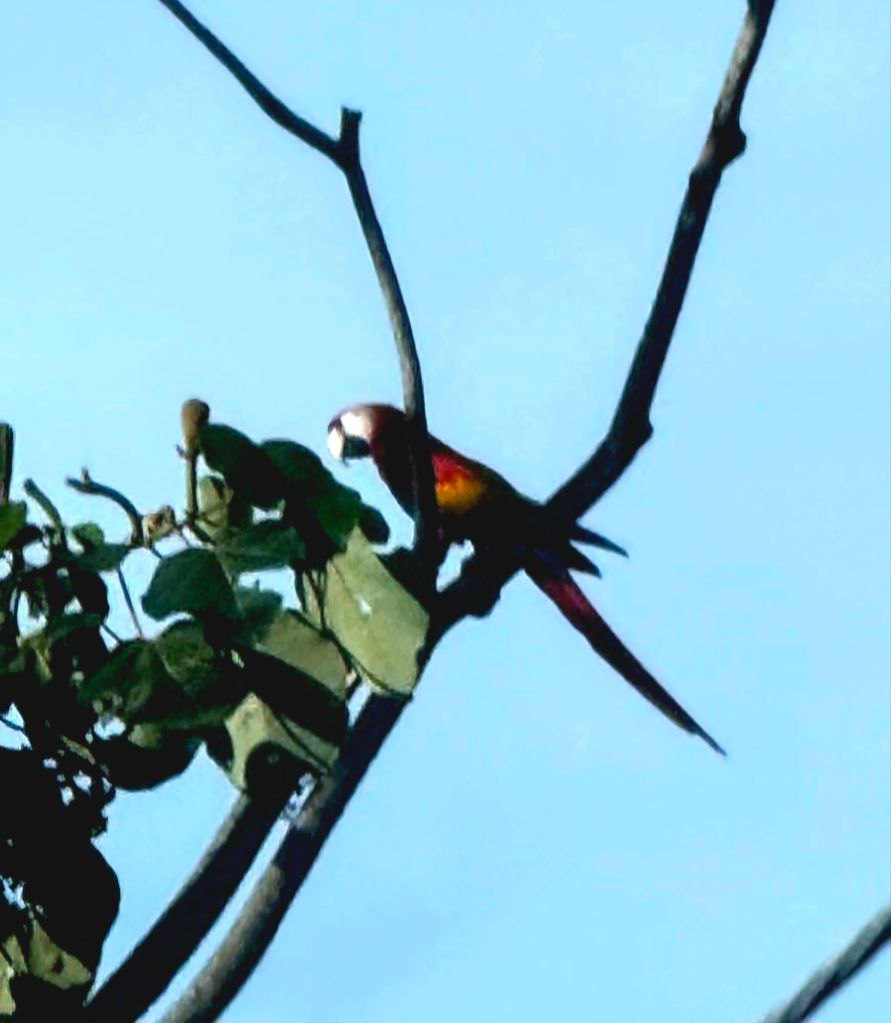
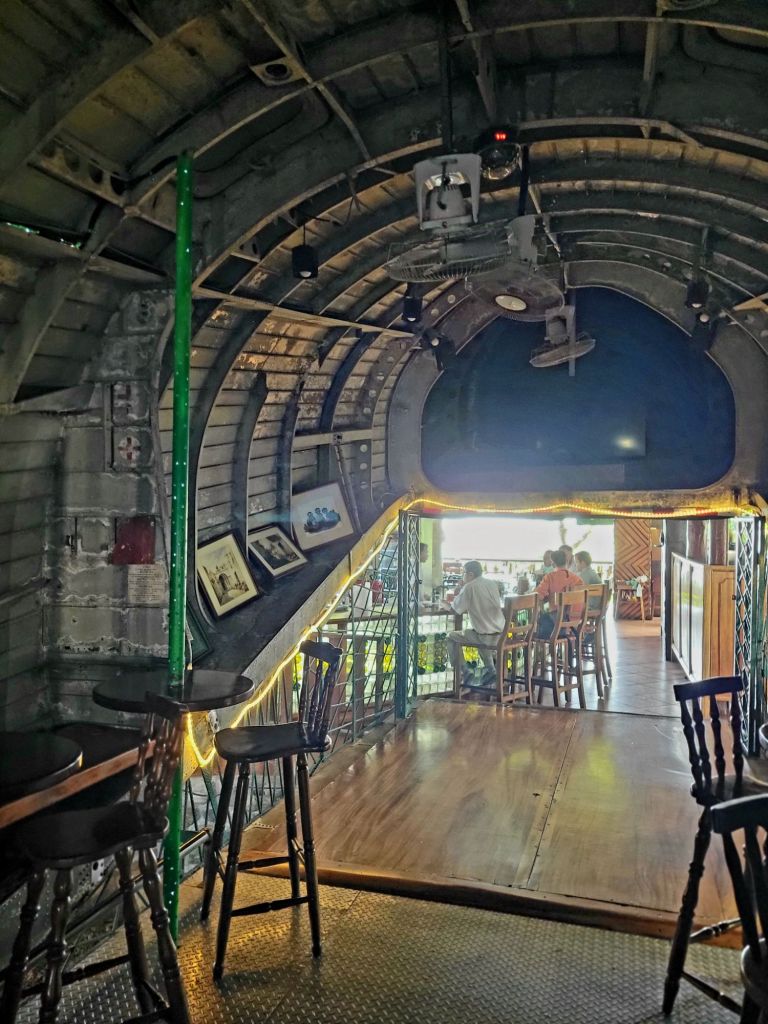
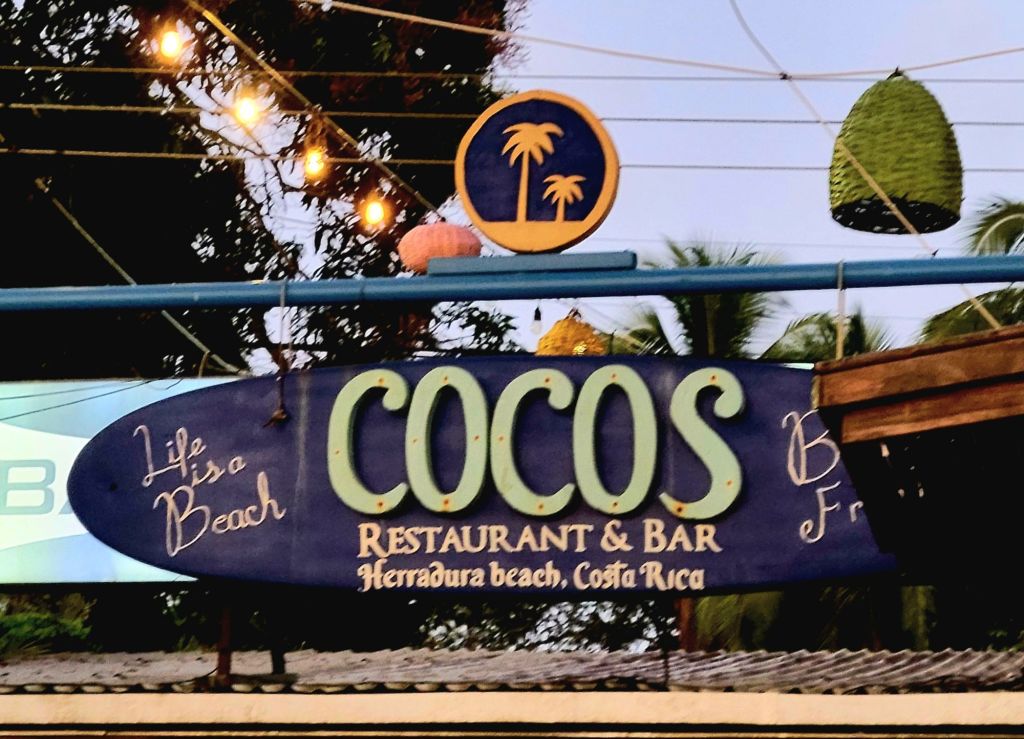
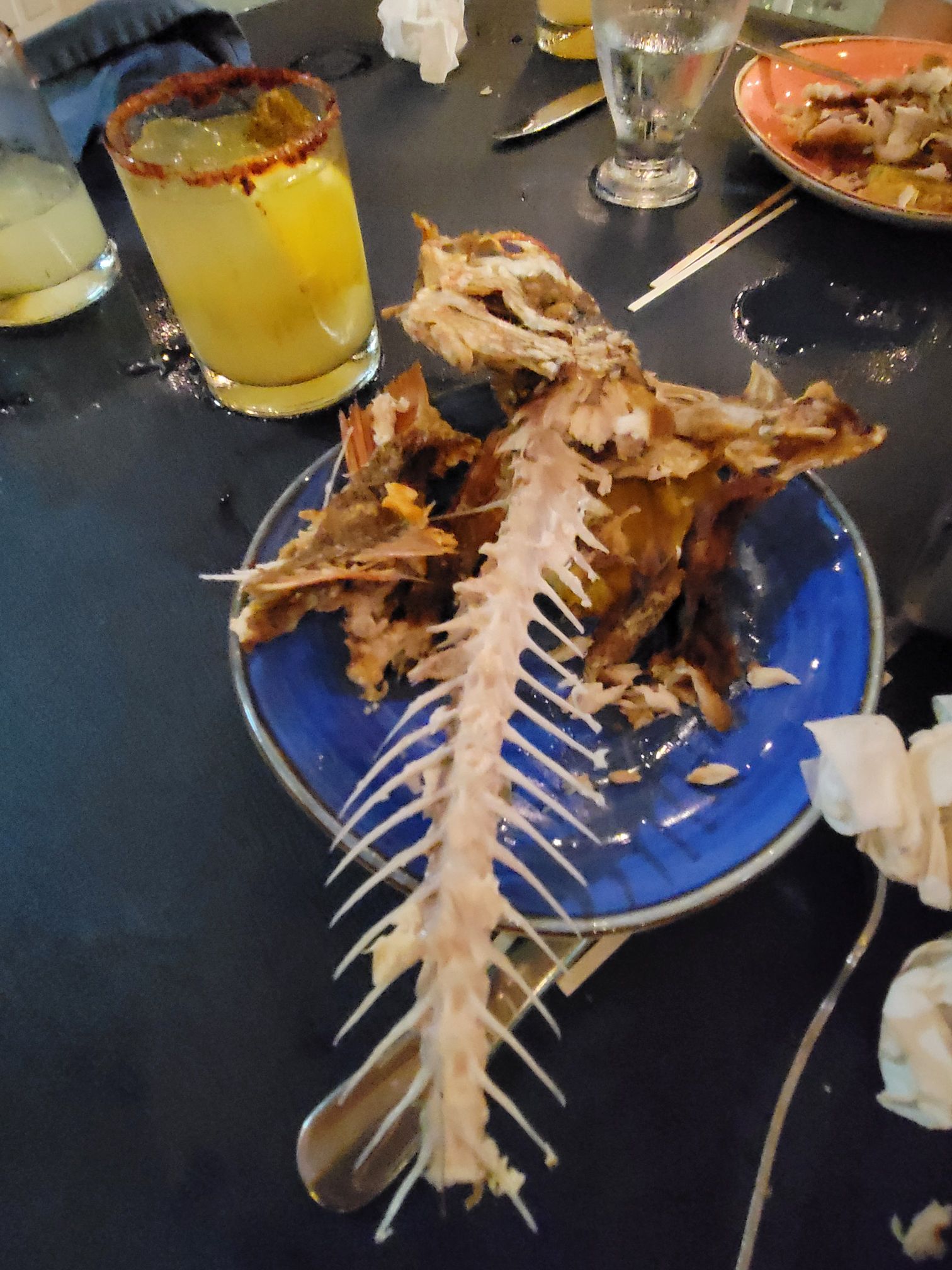
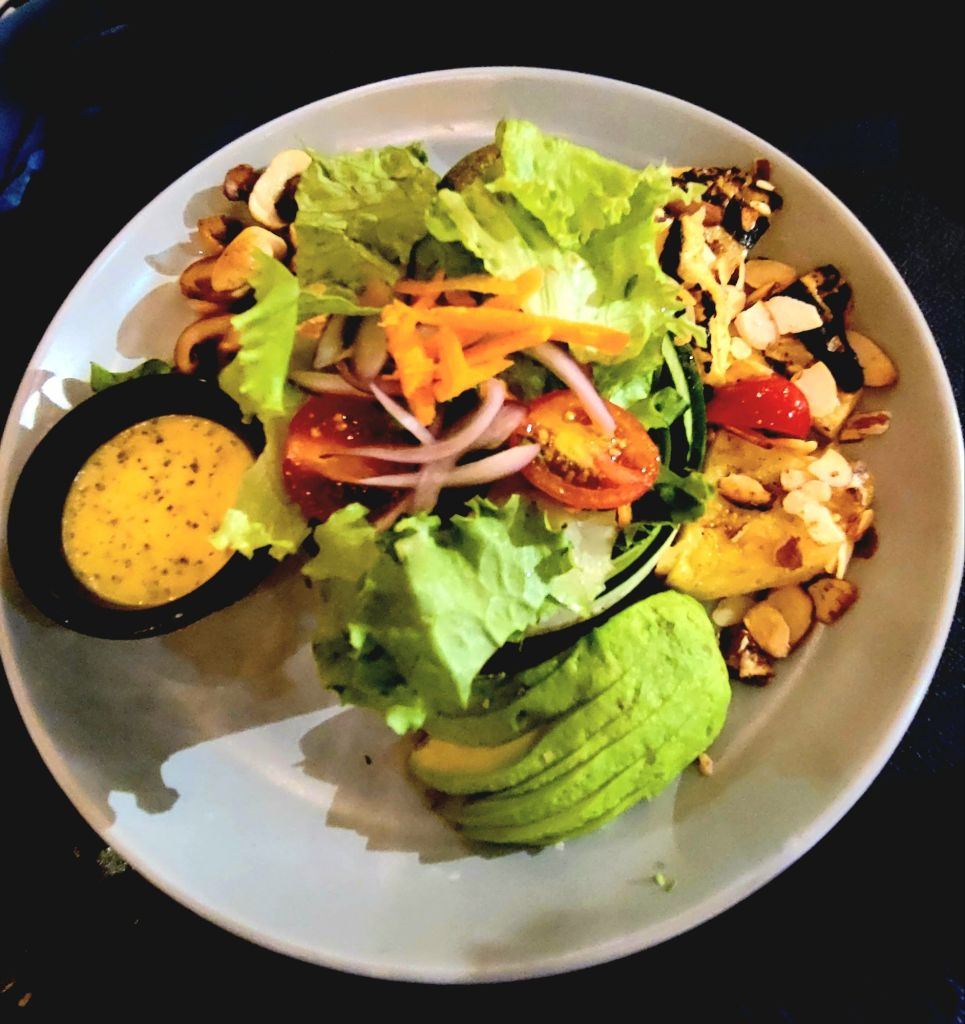
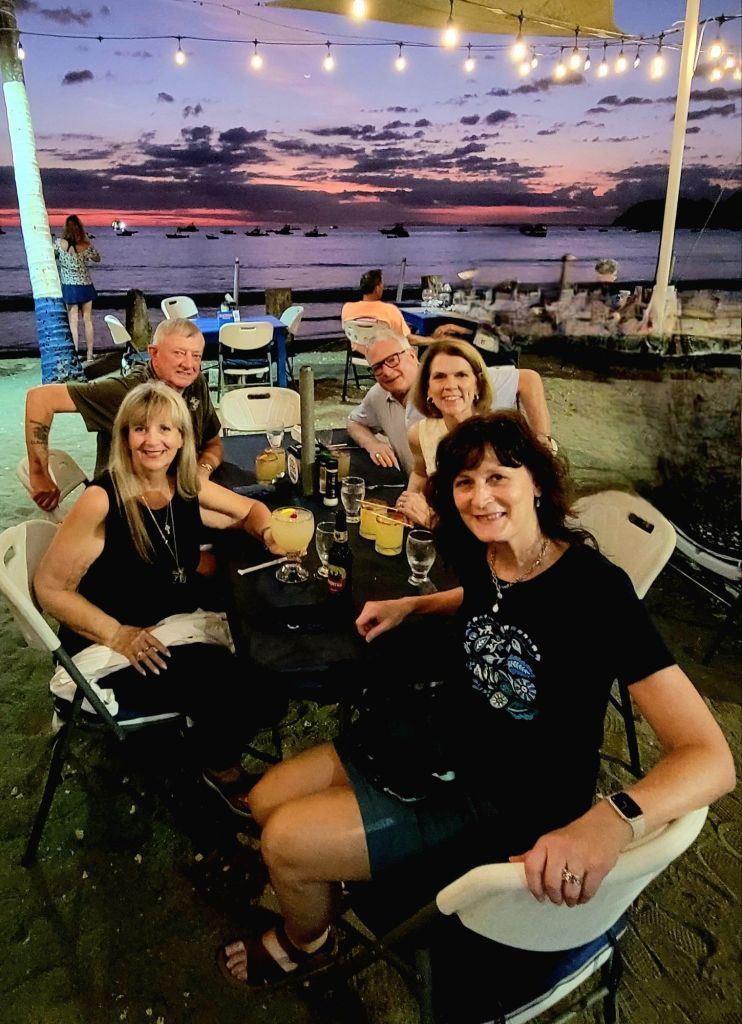
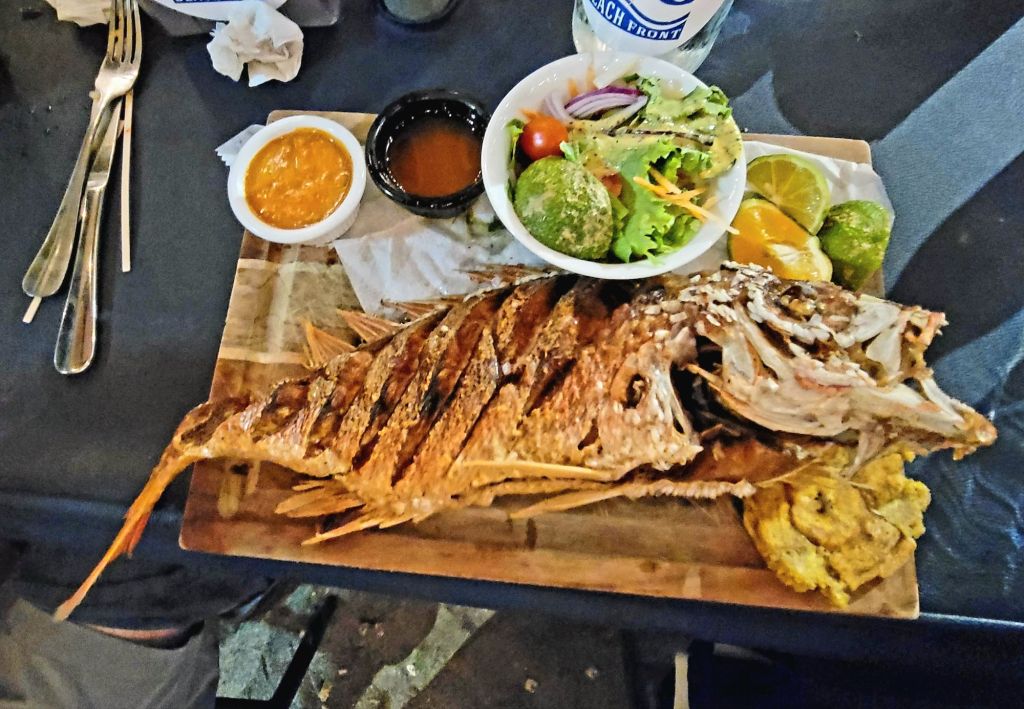
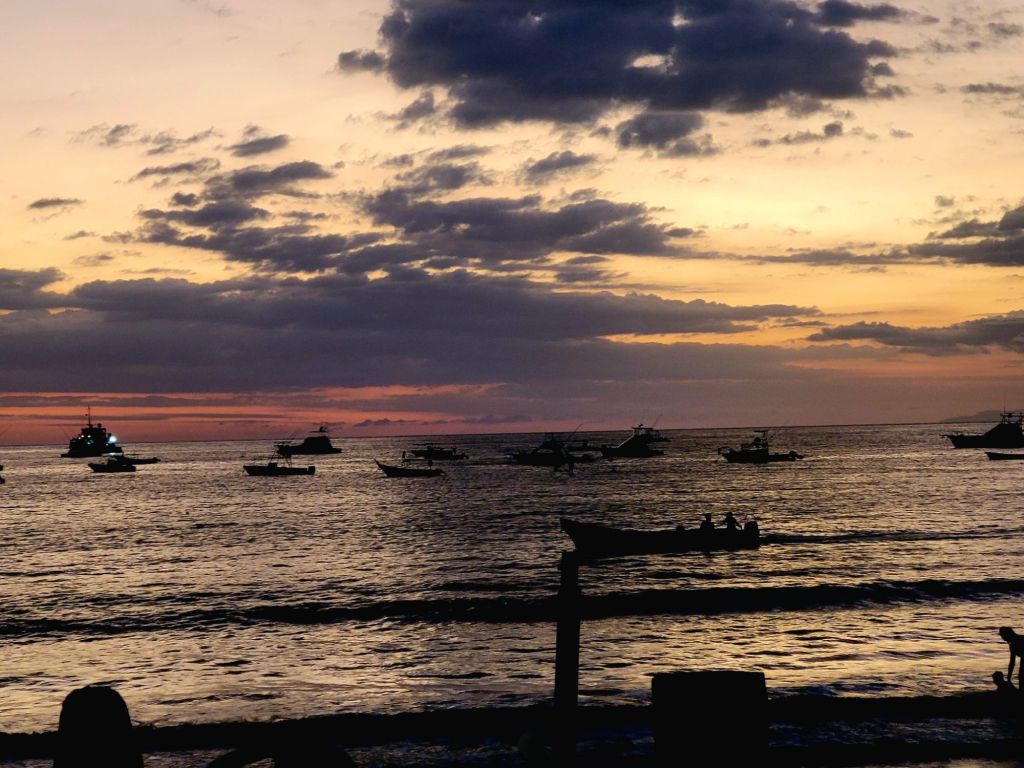
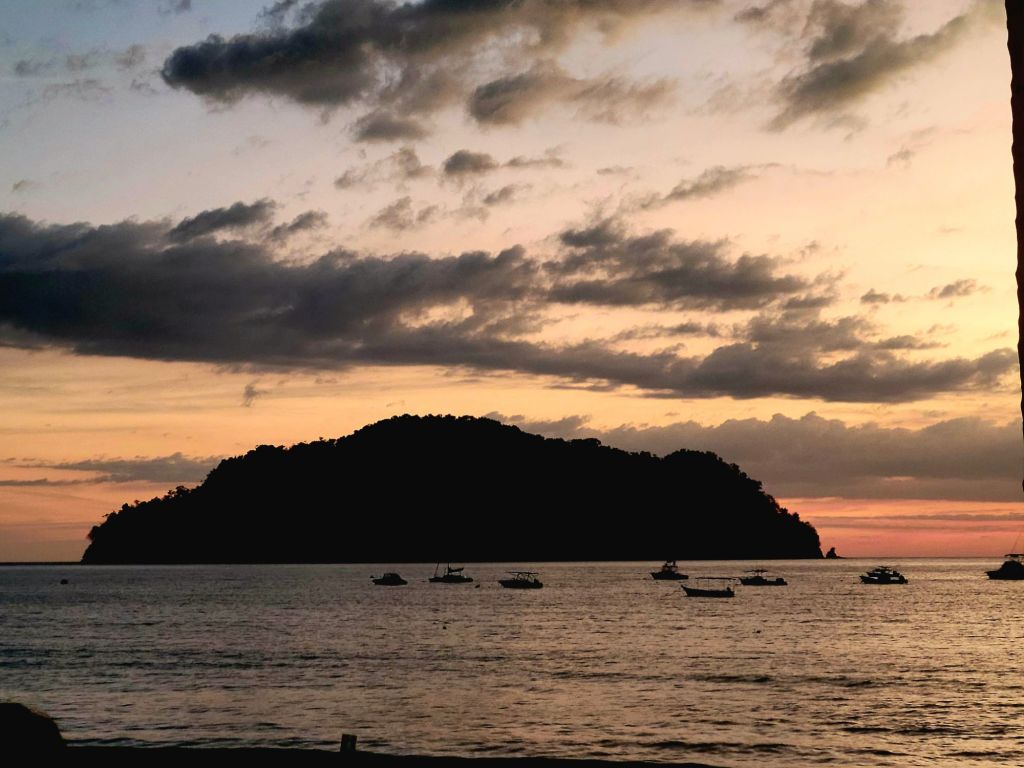
An early morning start needed an alarm. Breakfast at 6:30 am an on the bus at 7:30am. Off to the world-famous Manuel Antonio National Park. We needed an early morning start because it could be very crowded. The 2 hour drive seemed long, but very interesting. Ozzy gave us a lot of history of the area and of Manuel Antonio NP. We had to leave the bus and walk about 500 yards slightly uphill on a gravel path to the entrance of the park. We did have to wait in line to get into the park but were entertained by a white-faced spider monkey. Unfortunately, I didn’t get a picture. Once in the park, we spent about an hour walking 3/4 mile, sometimes flat, sometimes a slight grade uphill. It was a much wider path and it wasn’t difficult, but you did have to pay attention to where you were walking. We stopped often to view different trees, birds, lizards and sloths. Did I mention that we were in a tropical rain forest, and it was extremely humid. The pictures I’m posting were all taken today by either myself, Ozzy or a member of our group. When we reached the top of the hill, we took a right and headed toward the reward for our hot, sweaty walk …. the beach and the Pacific Ocean. We couldn’t wait to get in and the water temperature was perfect. The beach was white sand and the bottom of the ocean was also sand. So enjoyable. We stayed in about 45 minutes. No waves, no sharks, no fish. Head out on the sand path by the ocean through the Tropical Dry Forest. We then began our hike back through the Mangrove Swamp Forest. It was a nice deck-like walkway, about 8 feet wide and about again 3/4 mile long, back to the entrance of the park. Then back the small gravel path to the bus. Our next stop was in Quepos for lunch at El Avion. What a treat. We had a great meal, Pat said the best cerviche yet and my chicken Nachos were great. The pictures of the place will tell it’s own story. After the long drive back, it was a nice dip in the pool. Dinner was at Coco’s on the beach. Great margaritas, delicious fish, absolutely beautiful setting and priceless memories with new friends.
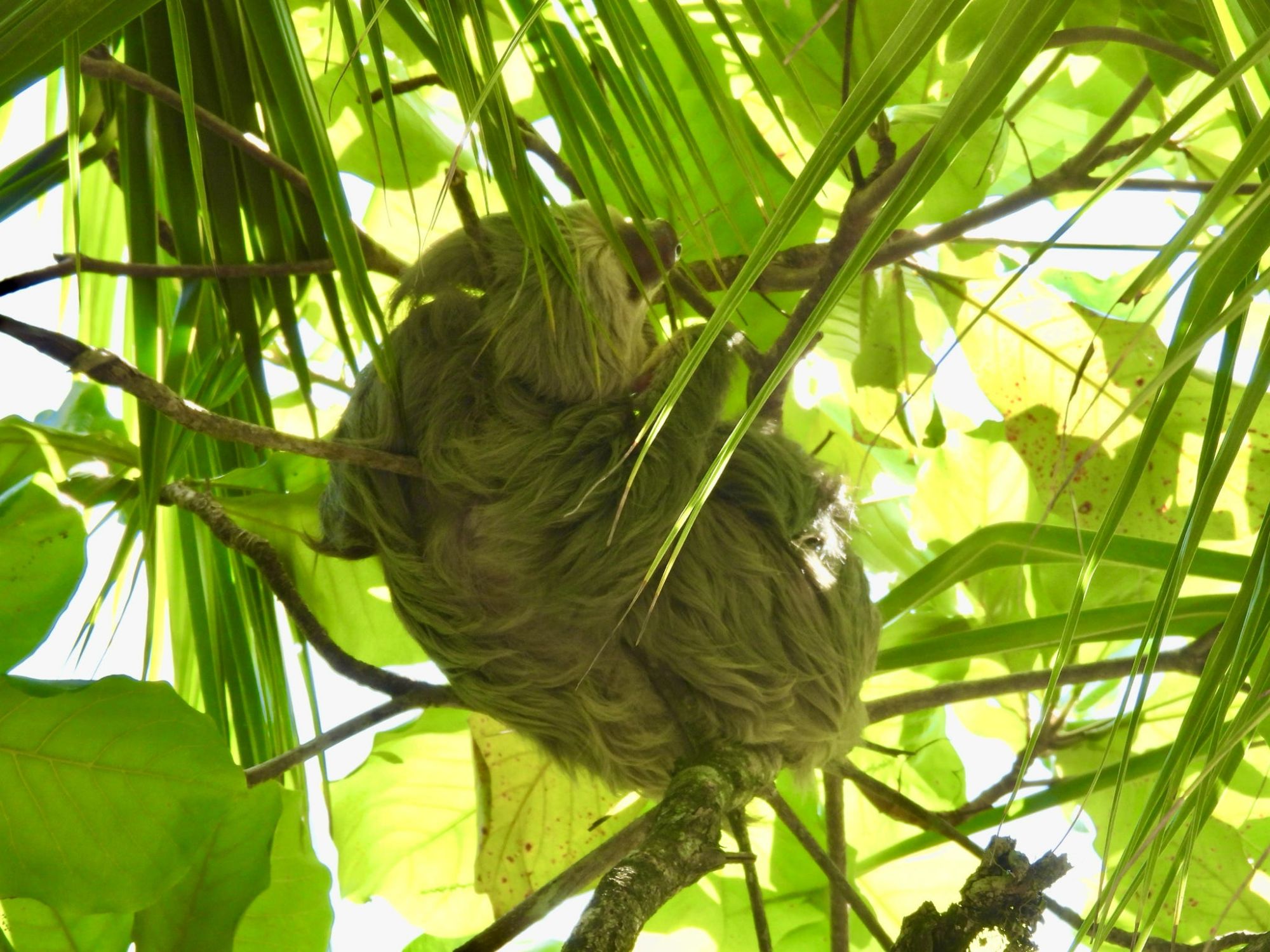
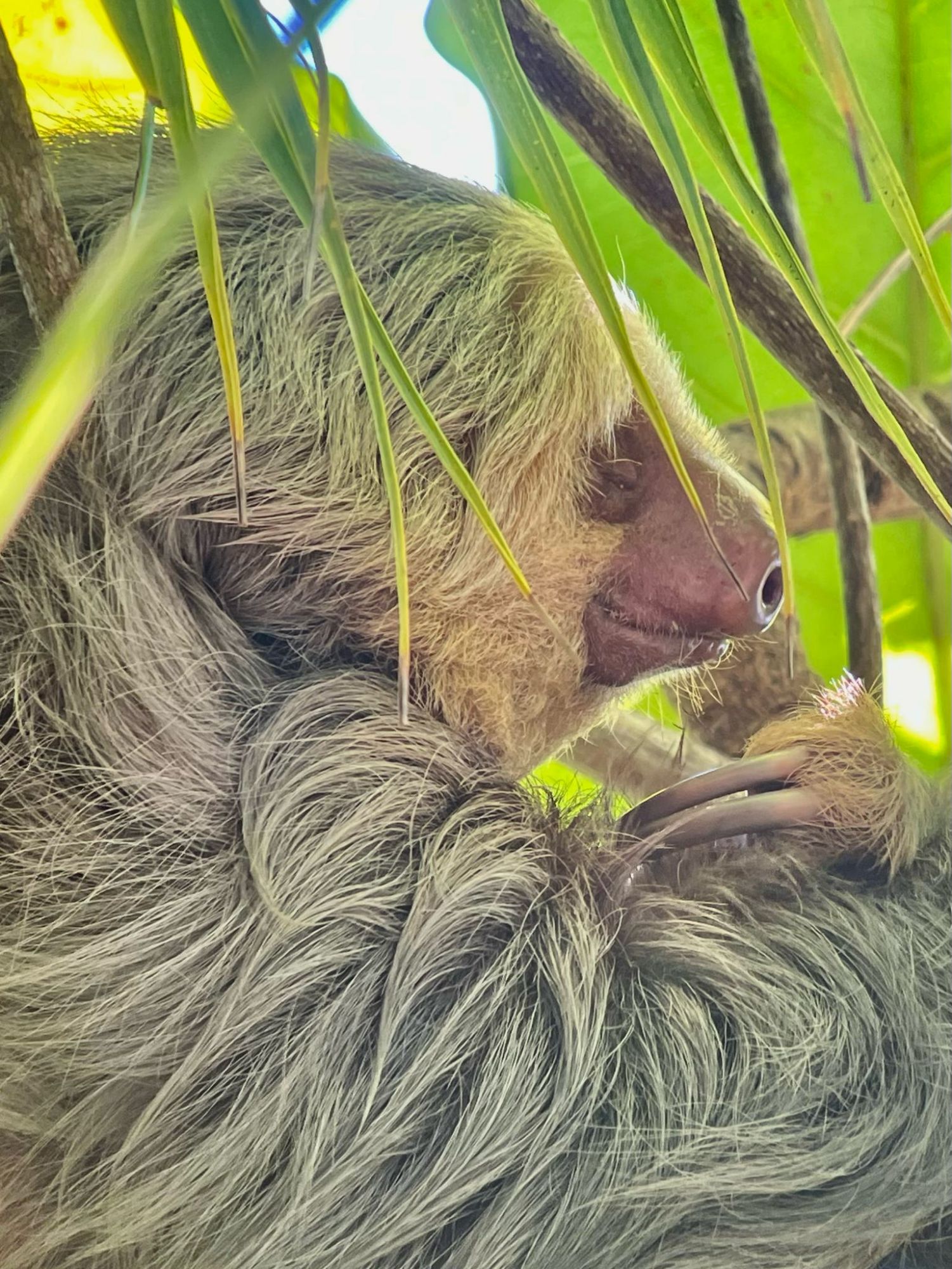
Their limbs are adapted for hanging and grasping, not for supporting their weight. Muscle mass makes up only 25 to 30 percent of their total body weight. Most other mammals have a muscle mass that makes up 40 to 45 percent of their total body weight. Their specialized hands and feet have long, curved claws to allow them to hang upside down from branches without effort, and are used to drag themselves along the ground, since they cannot walk. On three-toed sloths, the arms are 50 percent longer than the legs.
Sloths move only when necessary and even then, very slowly. They usually move at an average speed of 4 m (13 ft) per minute but can move at a marginally higher speed of 4.5 m (15 ft) per minute if they are in immediate danger from a predator. While they sometimes sit on top of branches, they usually eat, sleep, and even give birth hanging from branches. On the ground, the maximum speed of sloths is 3 m (9.8 ft) per minute. Two-toed sloths are generally better able than three-toed sloths to disperse between clumps of trees on the ground. Sloths are surprisingly strong swimmers and can reach speeds of 13.5 m (44 ft) per minute. They use their long arms to paddle through the water and can cross rivers and swim between islands. Sloths can reduce their already slow metabolism even further and slow their heart rate to less than a third of normal, allowing them to hold their breath underwater for up to 40 minutes.
Wild brown-throated three-toed sloths sleep on average 9.6 hours a day. Two-toed sloths are nocturnal. Three-toed sloths are mostly nocturnal but can be active in the day. They spend 90 per cent of their time motionless
Sloths are solitary animals that rarely interact with one another except during breeding season. Sloths descend about once every eight days to defecate on the ground. Two-toed sloths are omnivorous, with a diverse diet of insects, carrion, fruits, leaves and small lizards, ranging over up to 140 hectares (350 acres). Three-toed sloths, on the other hand, are almost entirely herbivorous (plant eaters), with a limited diet of leaves from only a few trees, and no other mammal digests its food as slowly. Baby sloths learn what to eat by licking the lips of their mother.






 Suzi Travels
Leave a comment