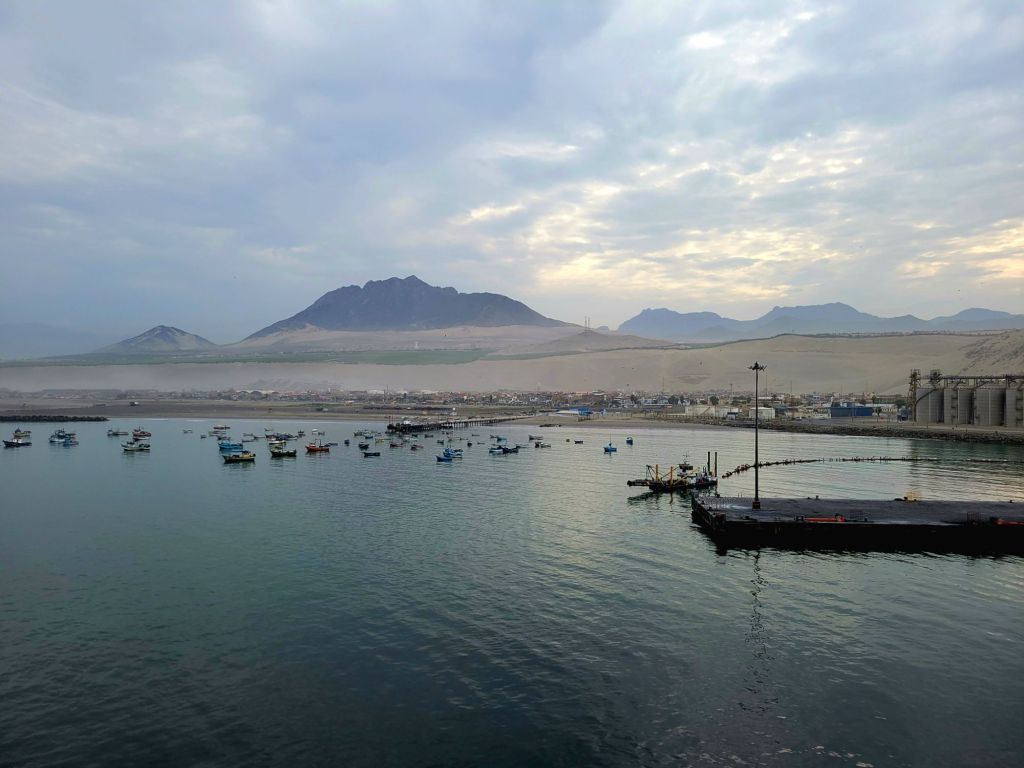
Salaverry (Trujillo), Peru
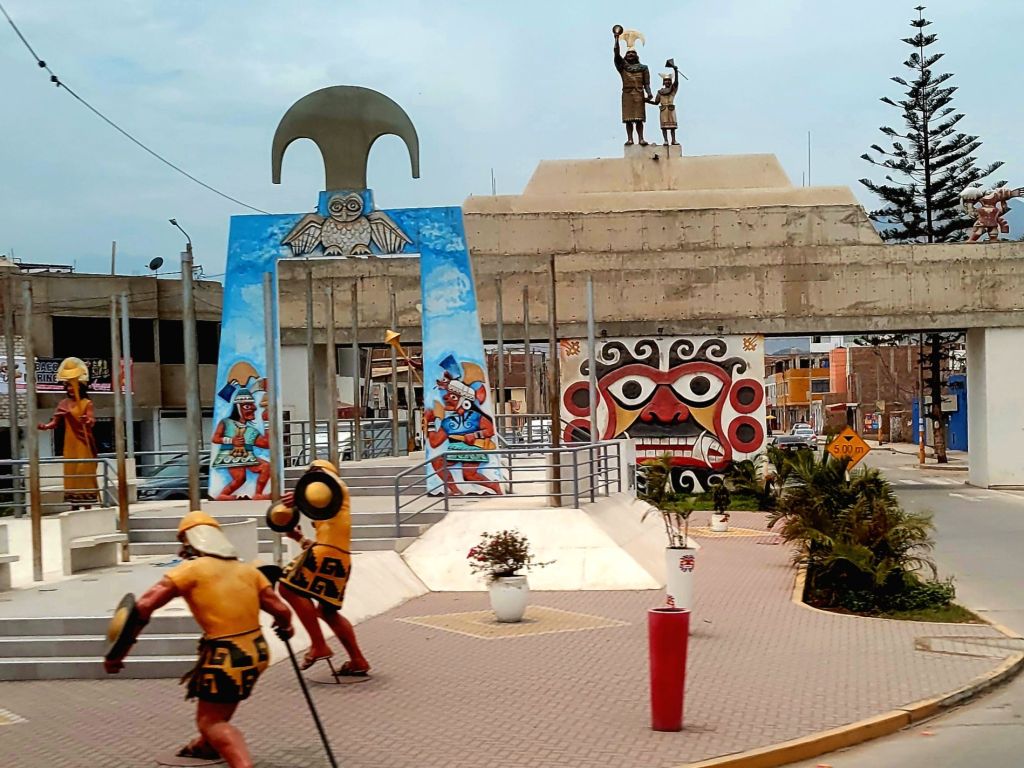
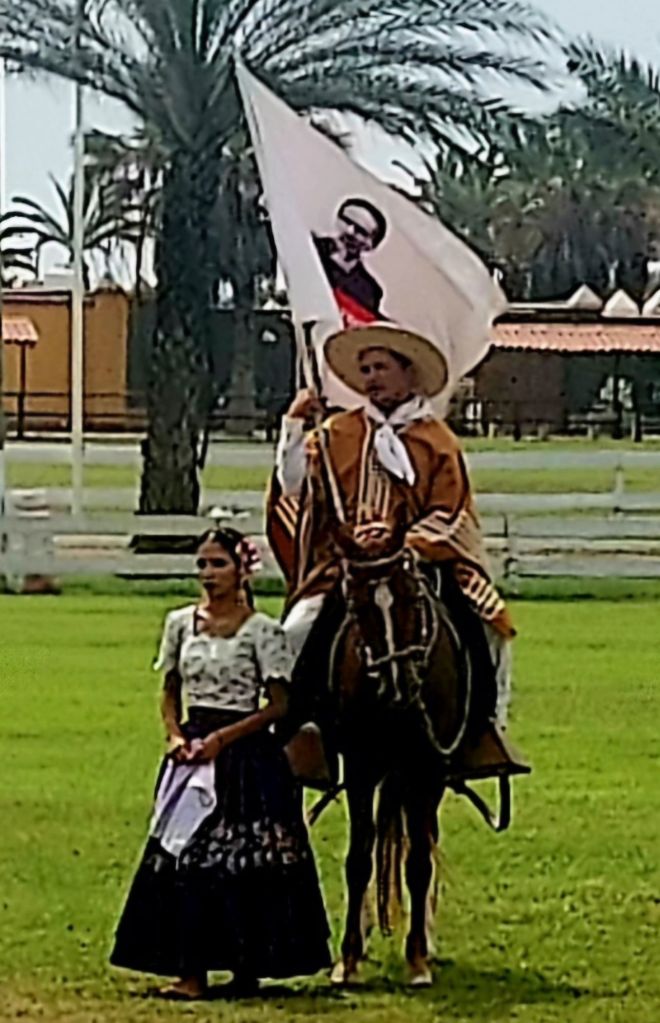
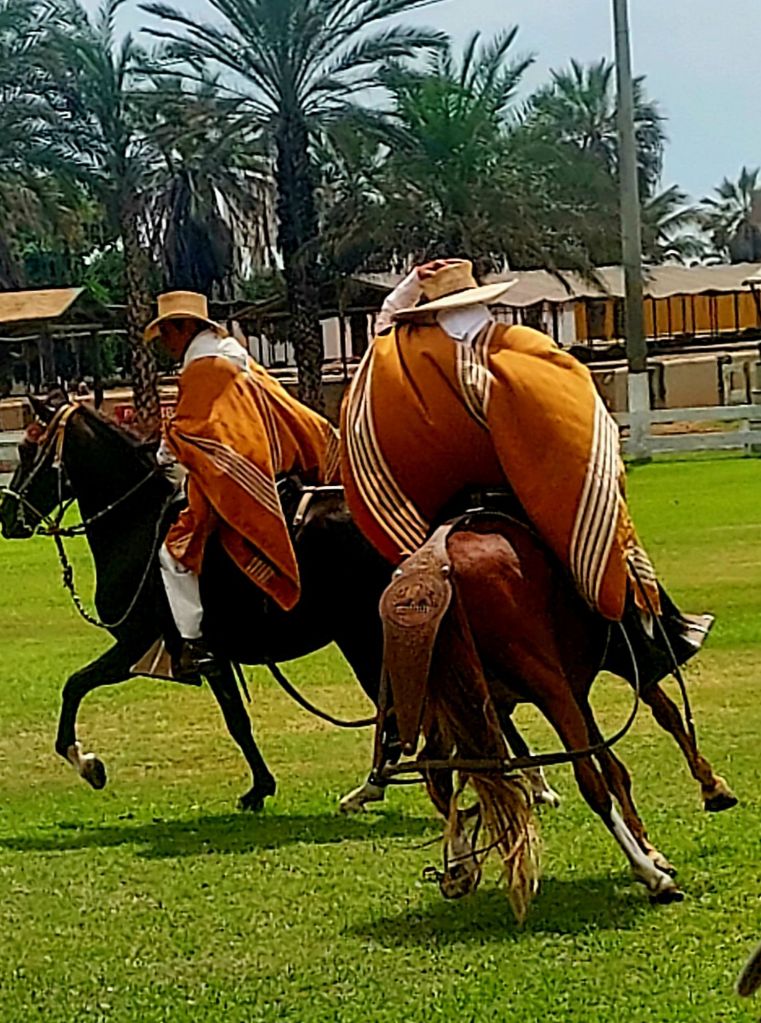
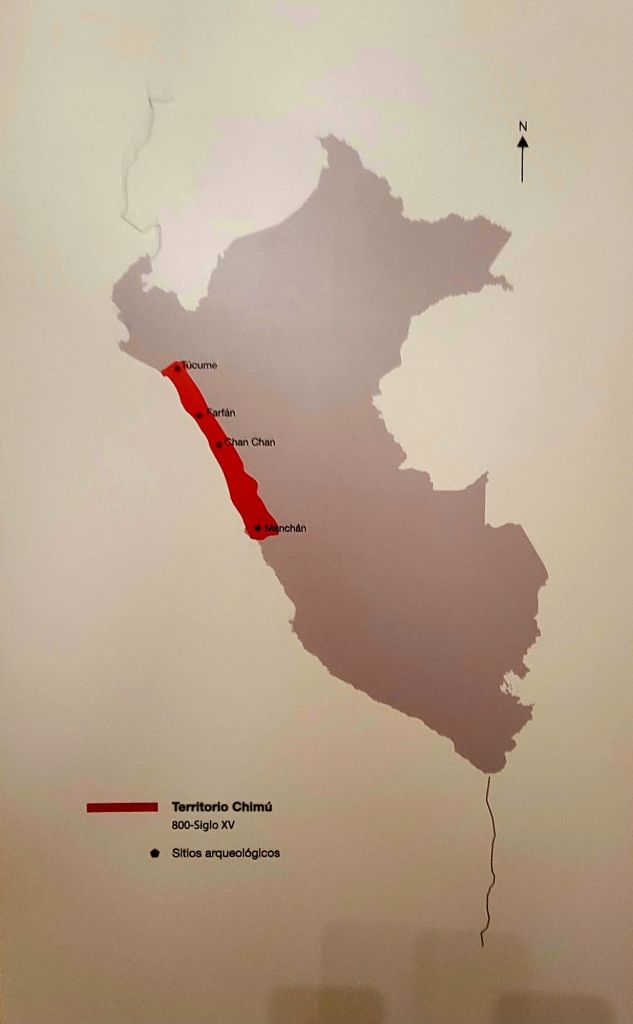
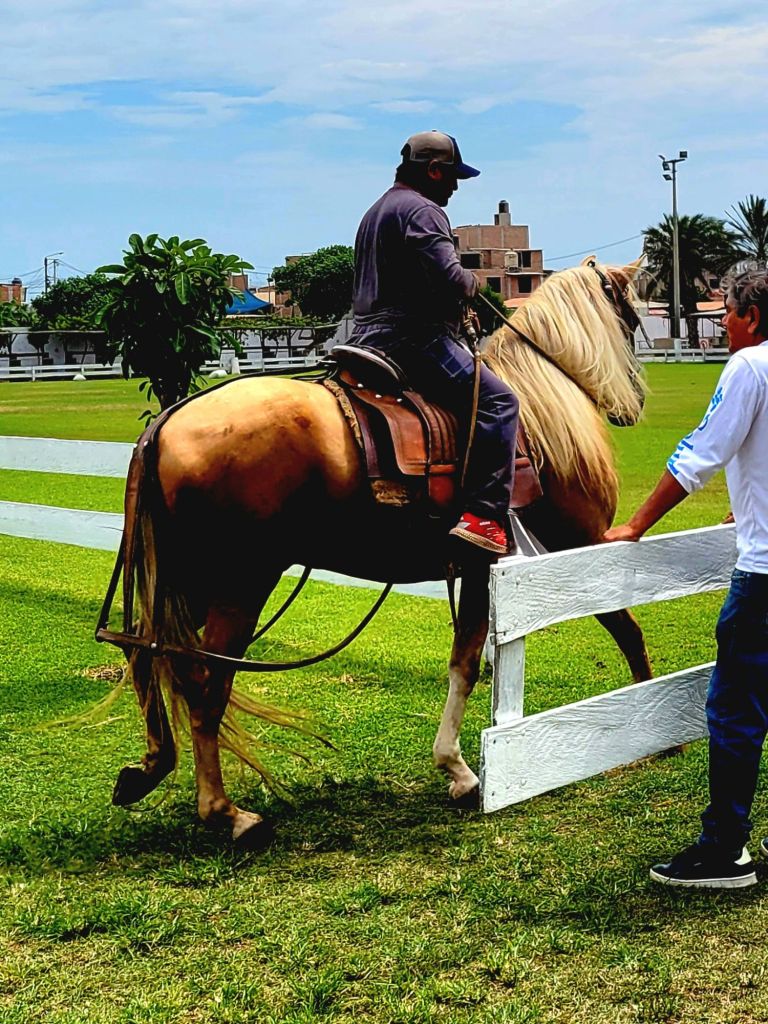
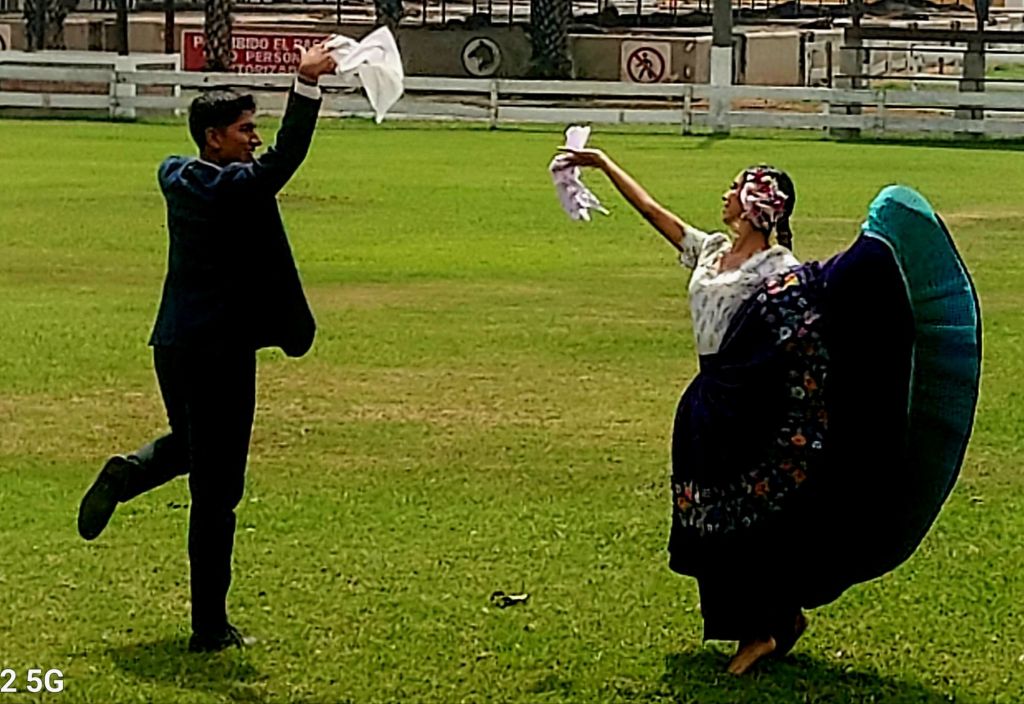
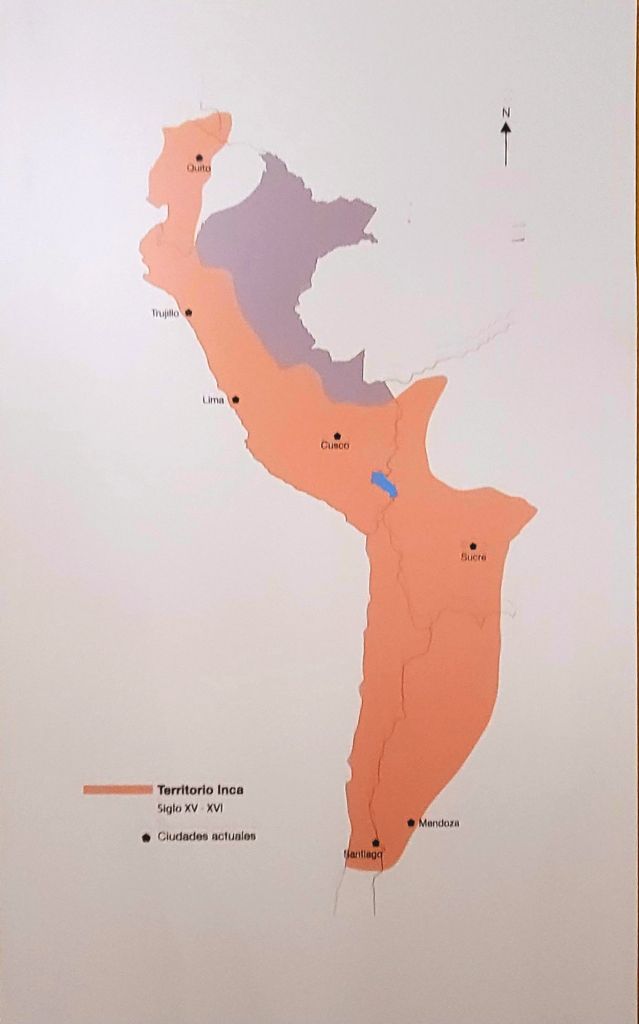
Trujillo is a city in coastal northwestern Peru and the capital of the Department of La Libertad. It is the third most populous city, about 1.5 million, and center of the third most populous metropolitan area of Peru. It is located on the banks of the Moche River, near its mouth at the Pacific Ocean, in the Moche Valley. This was a site of the great prehistoric Moche and Chimu cultures before the Inca conquest and subsequent expansion. The Independence of Trujillo from Spain was proclaimed in the Historic Centre of Trujillo on December 29, 1820, and the city was honored in 1822 by the Congress of the Republic of Peru with the title “Meritorious City and Faithful to the Fatherland”, for its role in the fight for Peruvian independence. Trujillo is the birthplace of Peru’s judiciary. Trujillo is also known as the “City of Everlasting Spring”, is considered the “Capital of the Marinera”, a traditional dance in Peru, “Cradle of the Peruvian Paso horse”, as well as the “Capital of Culture of Peru”. In short, it is a very important city.
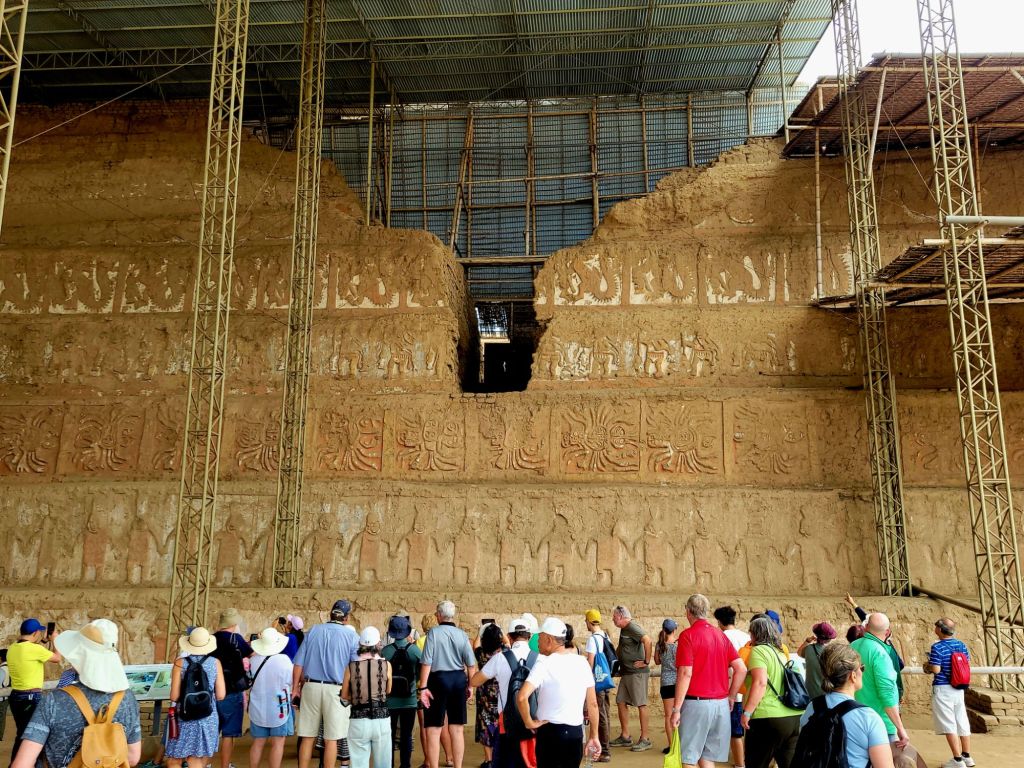
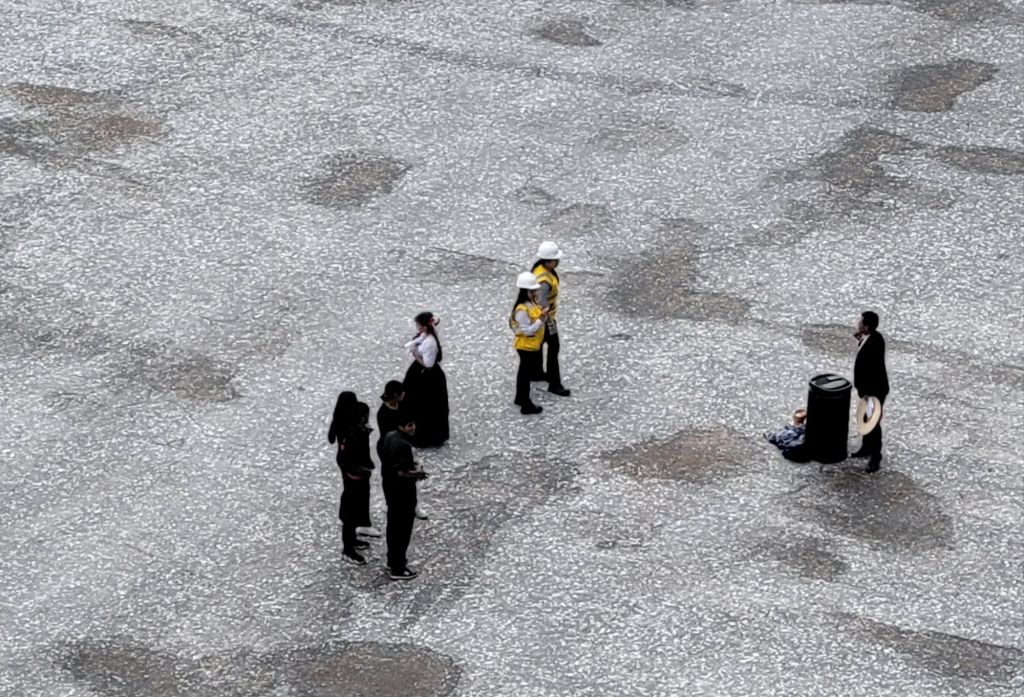
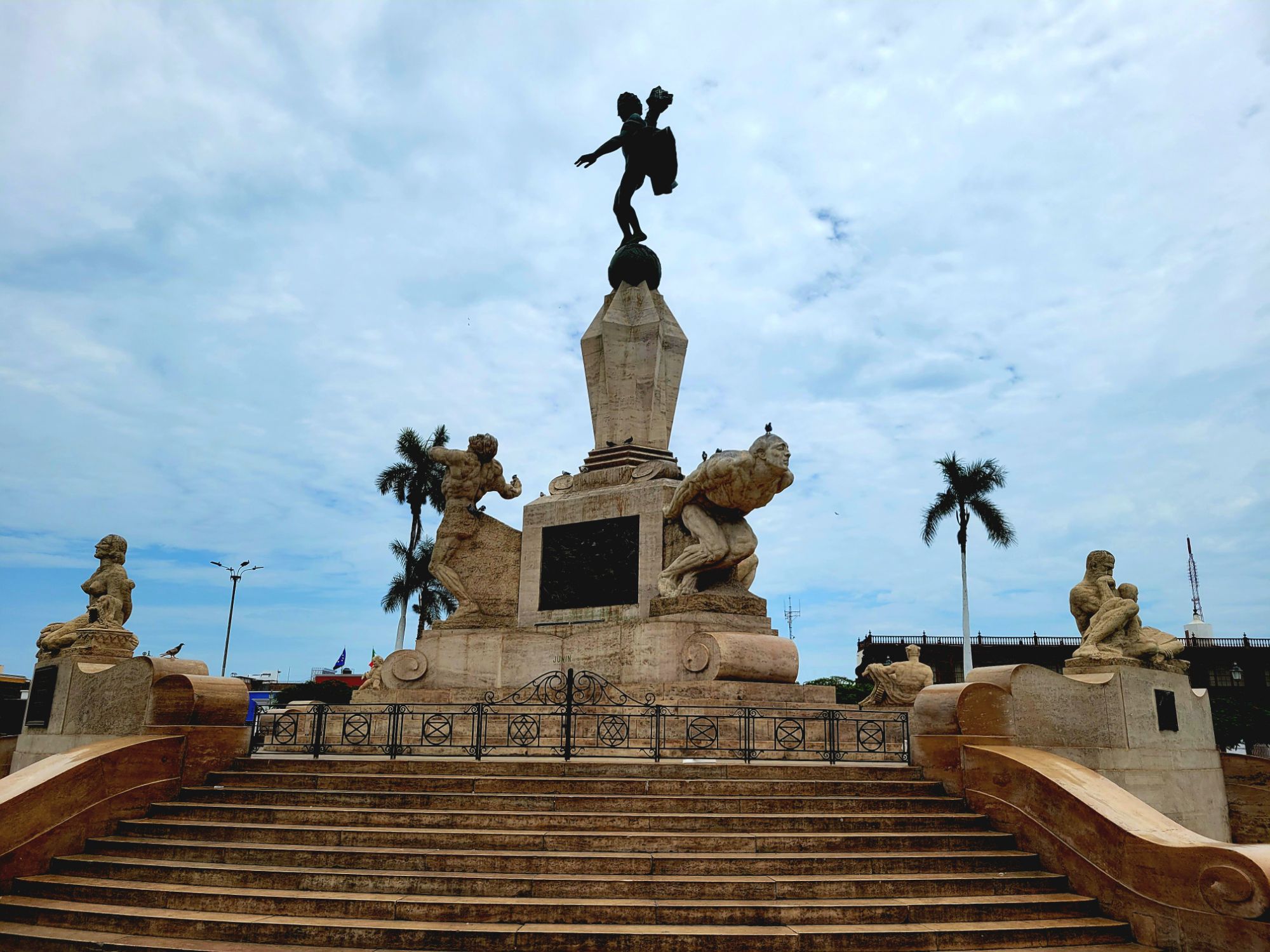
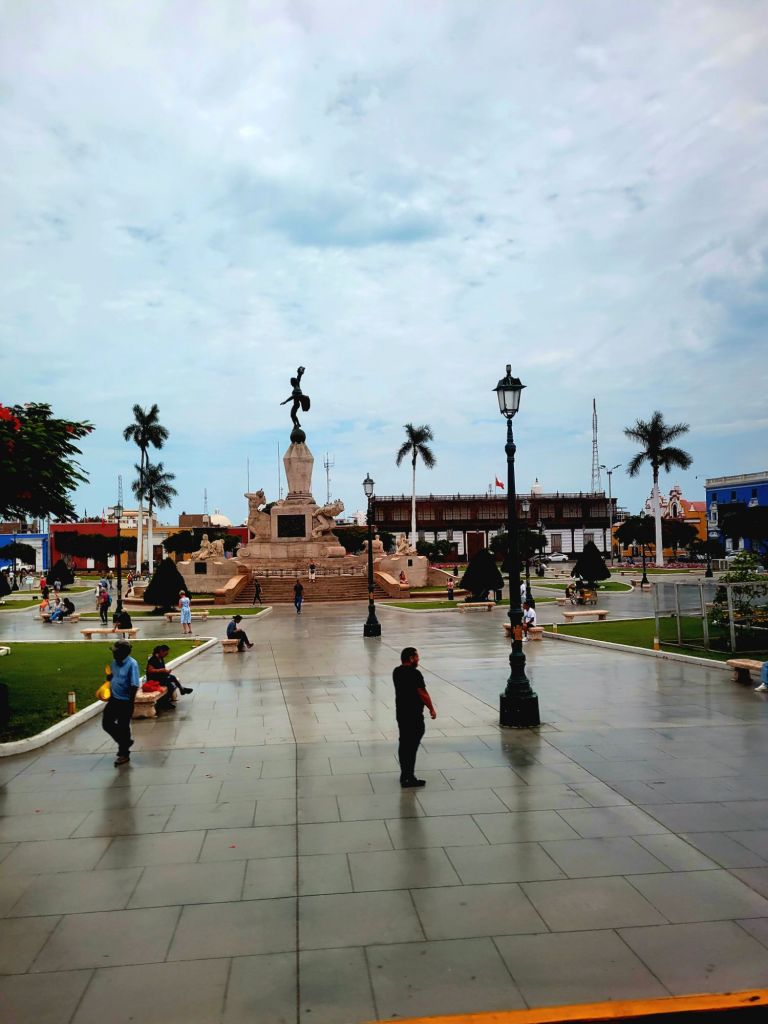
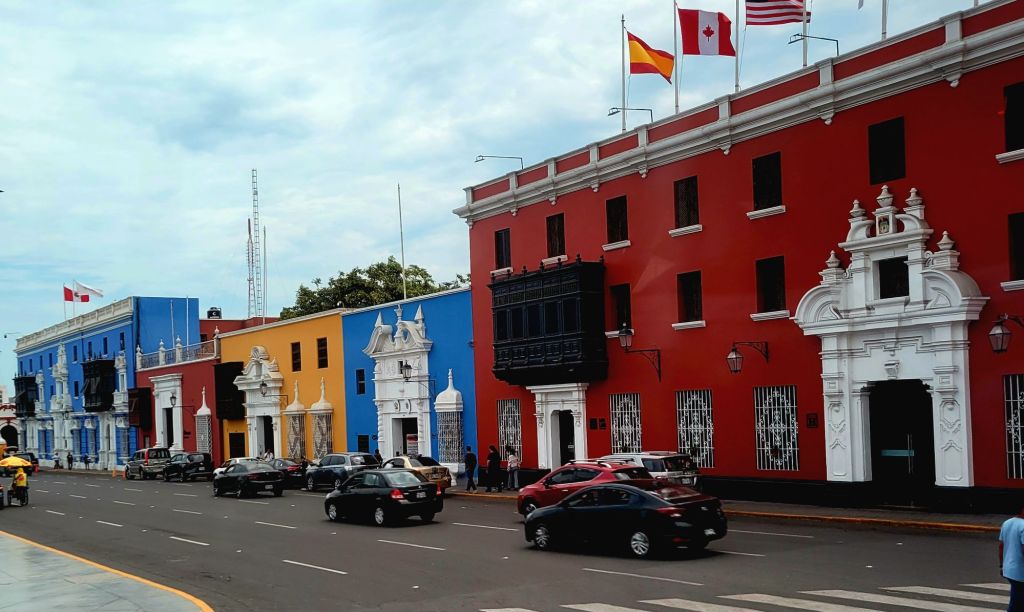
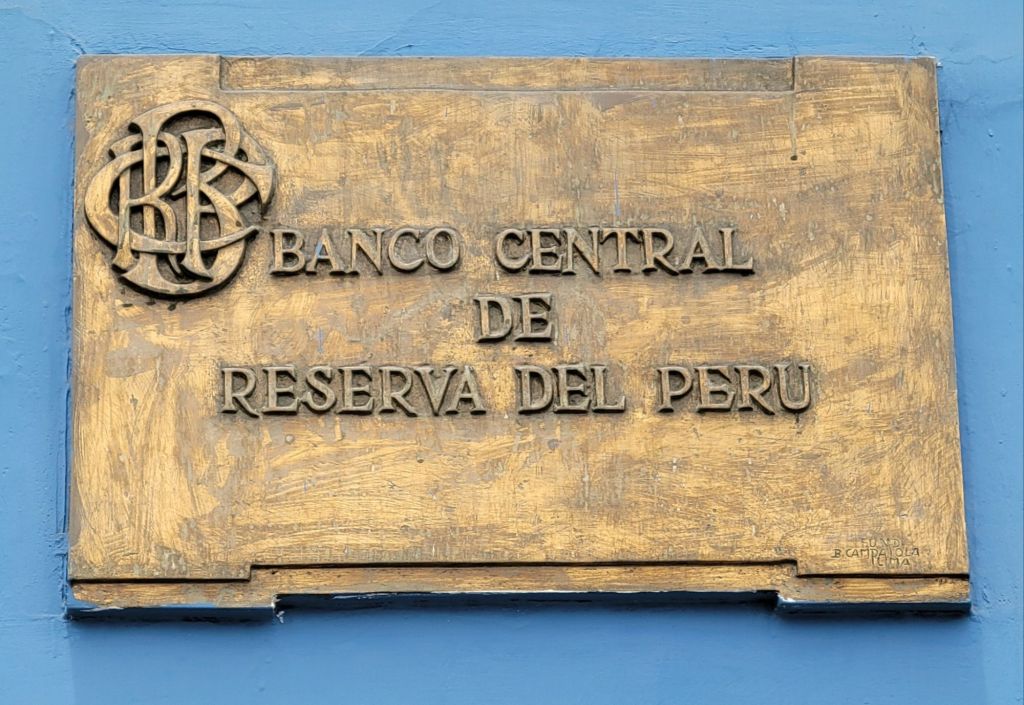
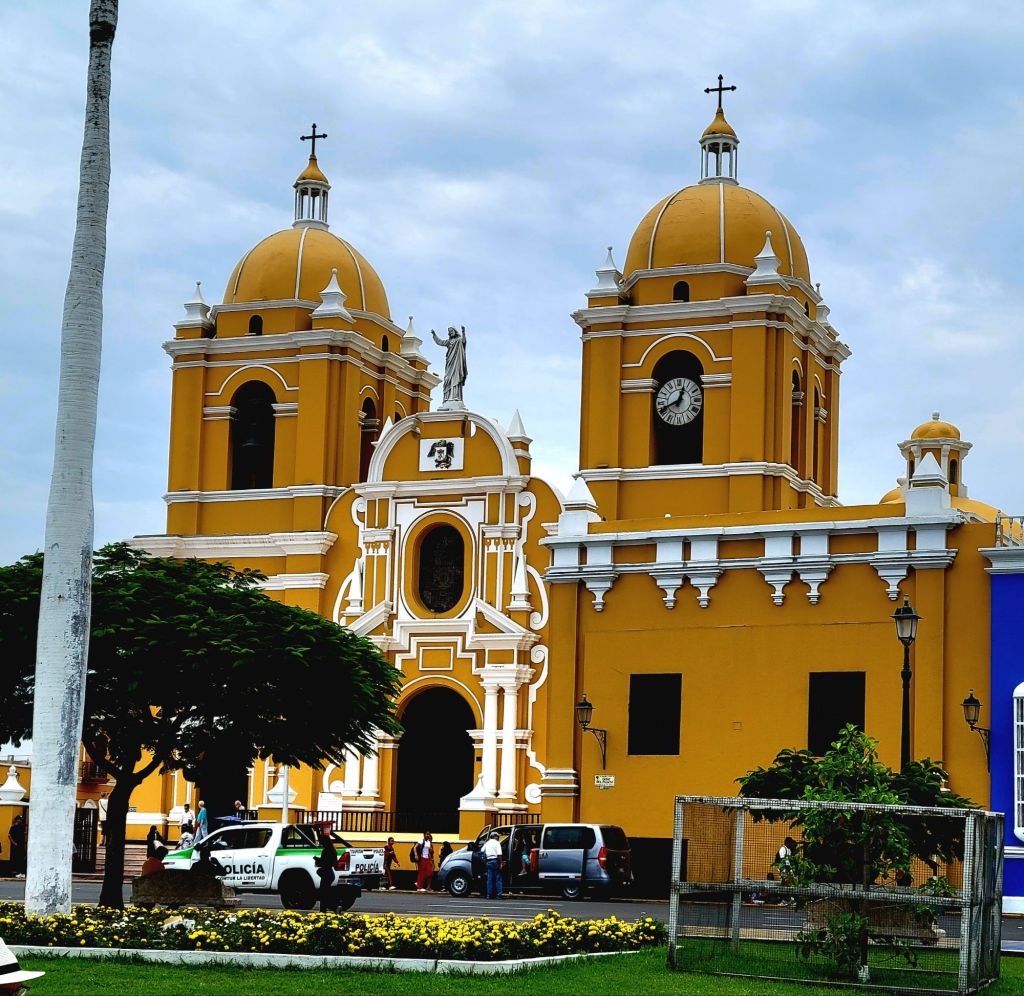
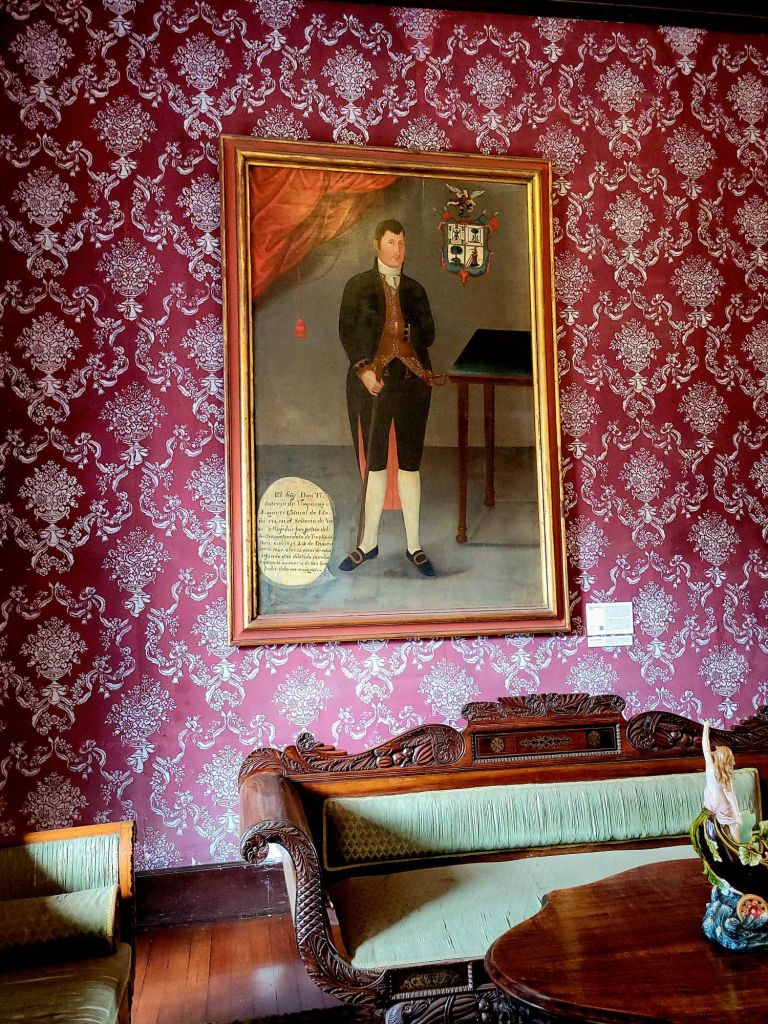
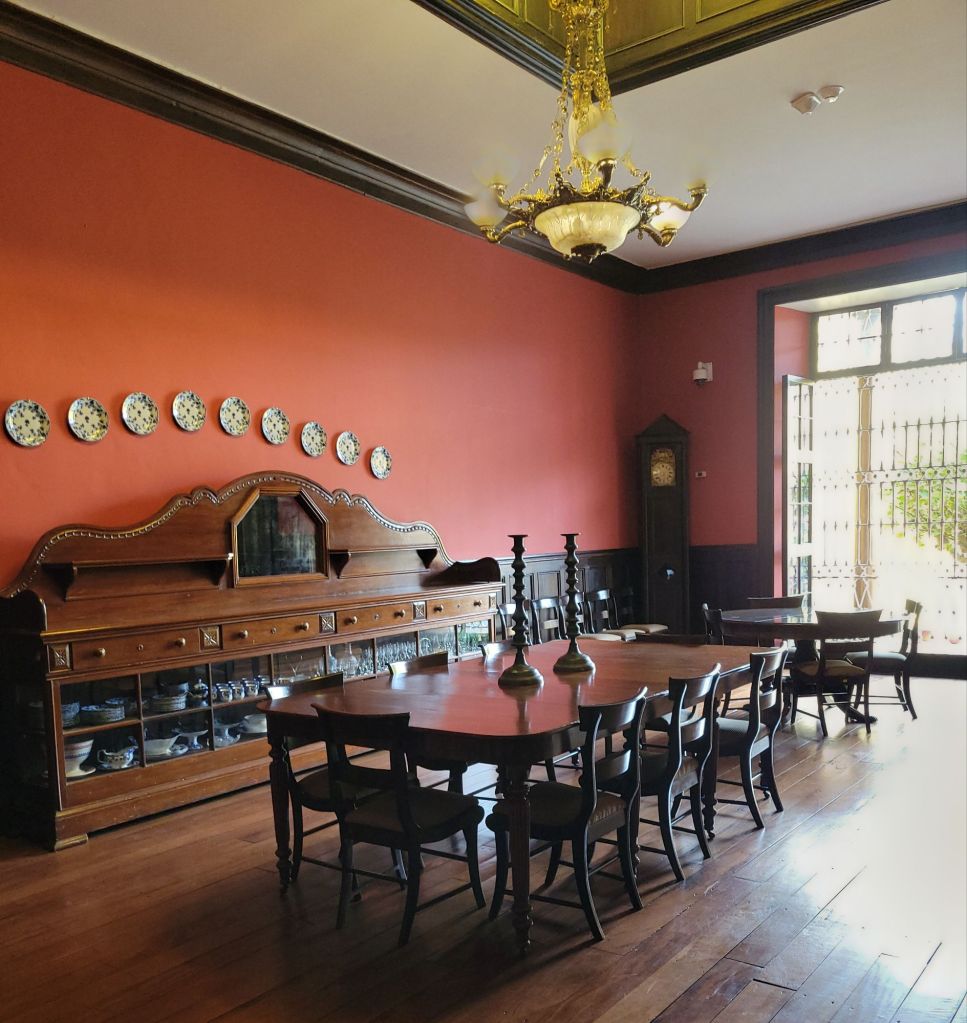
We visited the Huaca de la Luna, Temple of the Moon…as well as the Plaza de Armas. Three wonderful stucco churches…all represented in a traditional adobe color. The largest is the Iglesia de Santo Domingo. Structures bordering the Plaza are colorful and historic. We visited one neoclassical house, owned by the bank and turned into a museum. It is referred to as The Independence House”
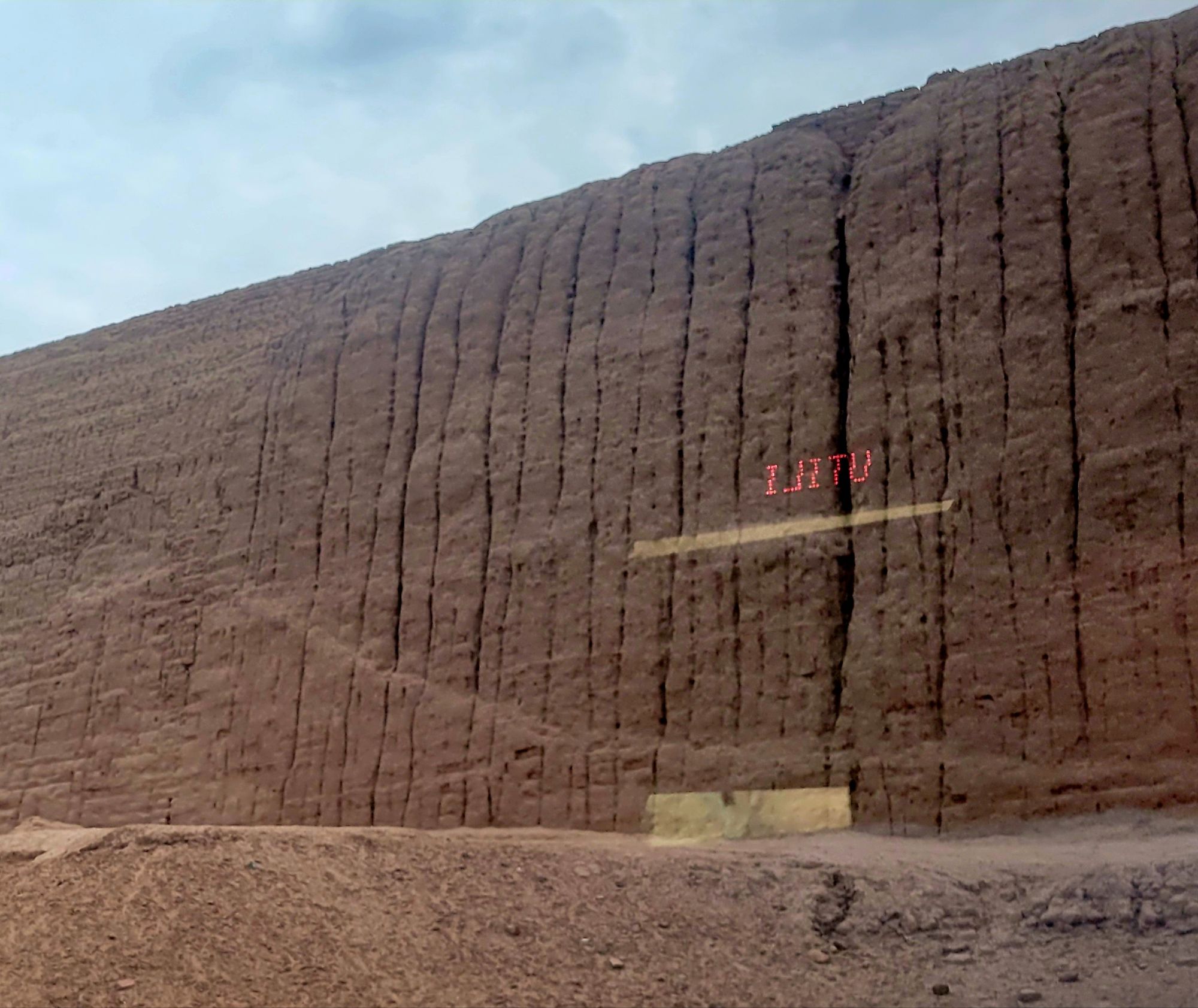
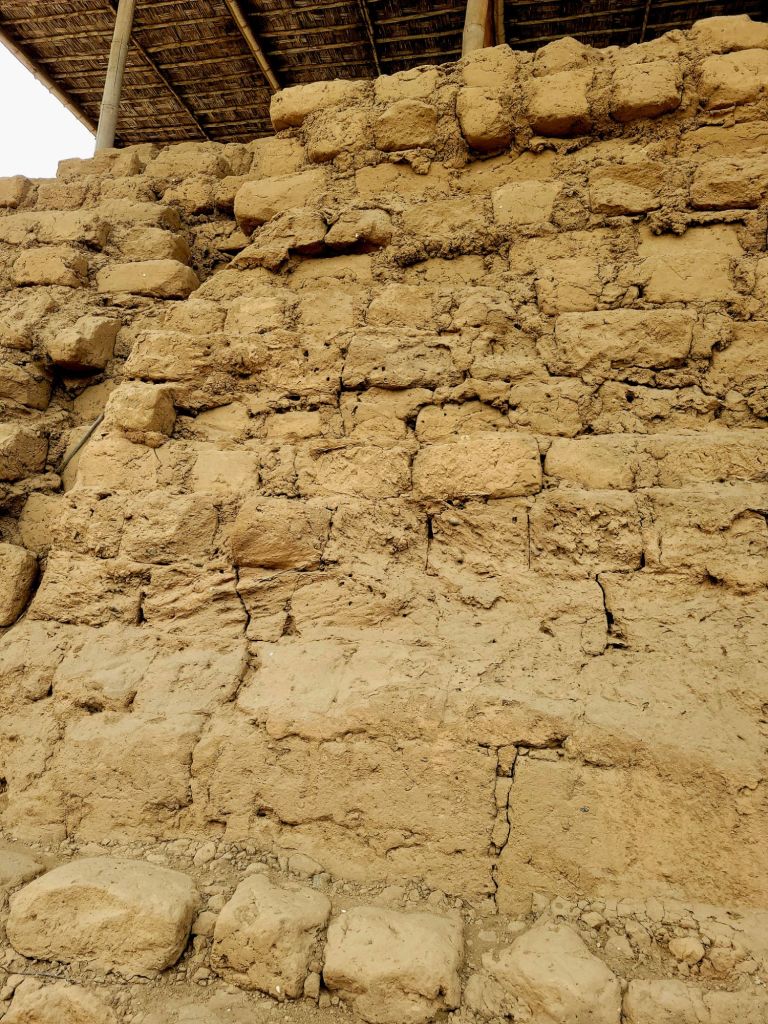
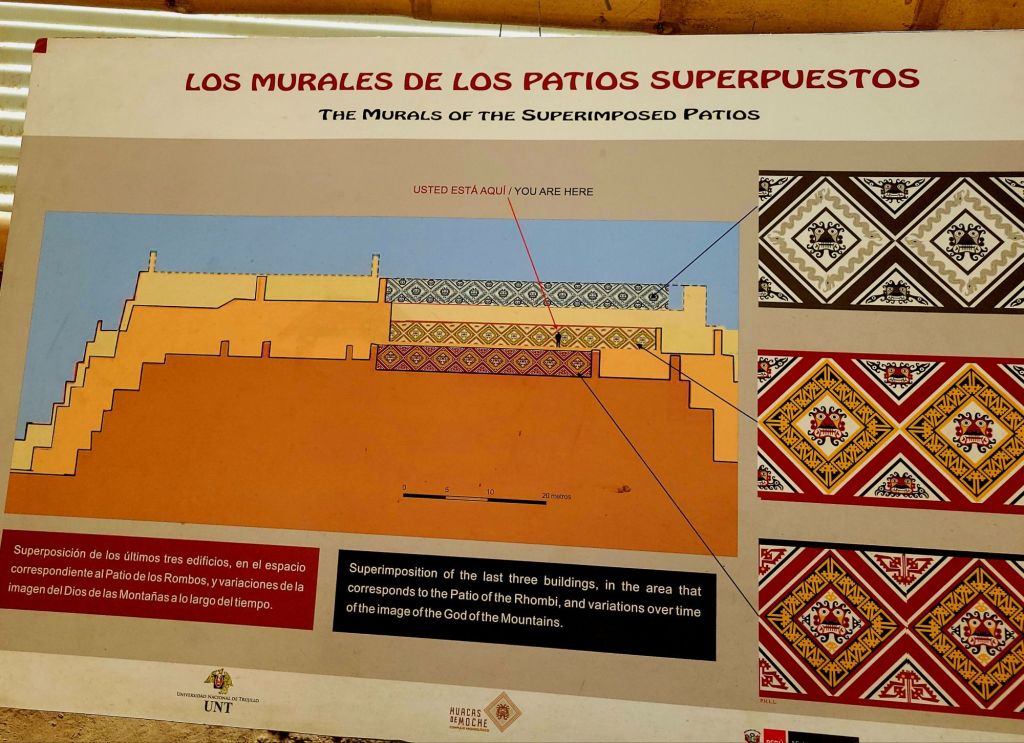
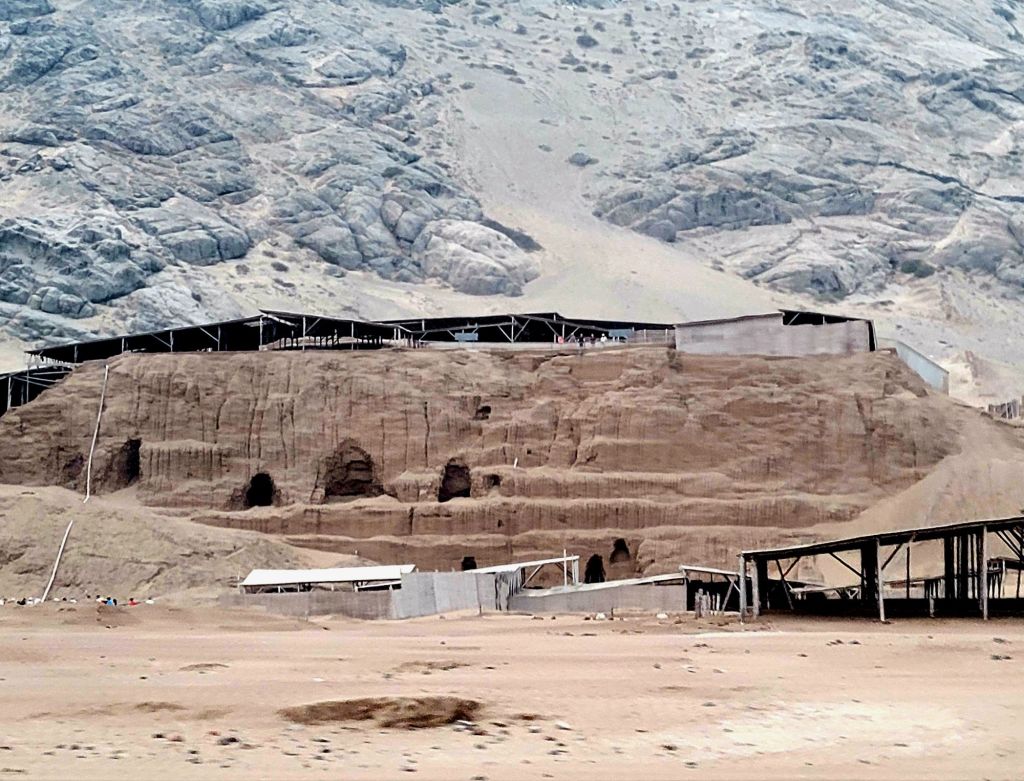
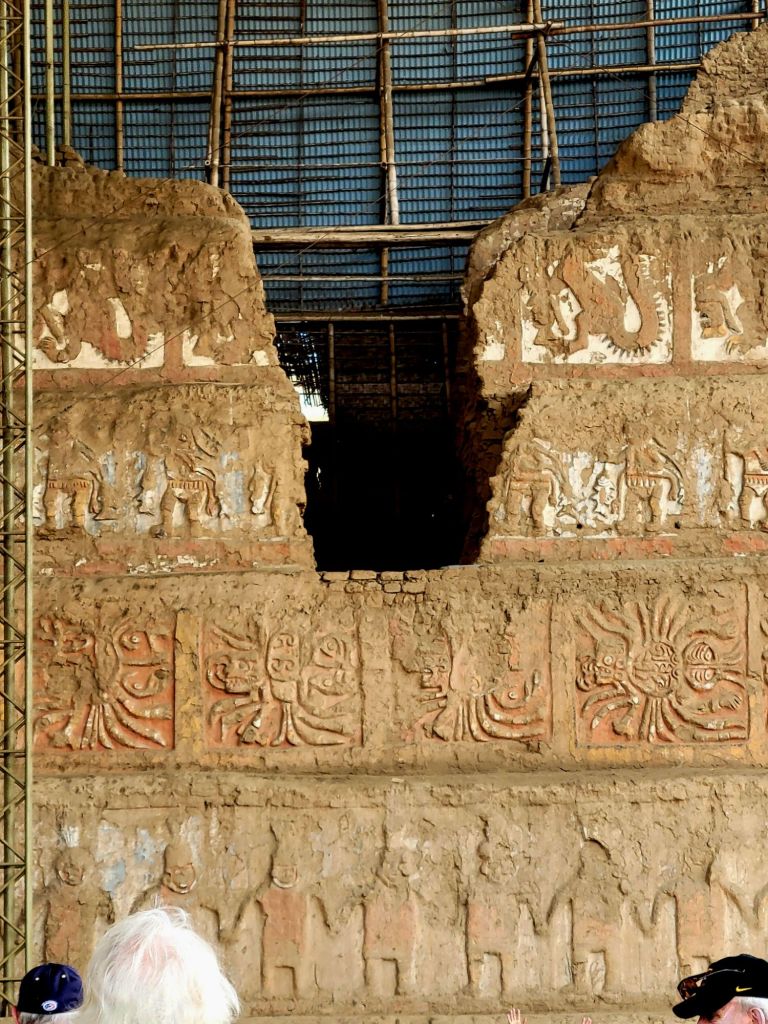
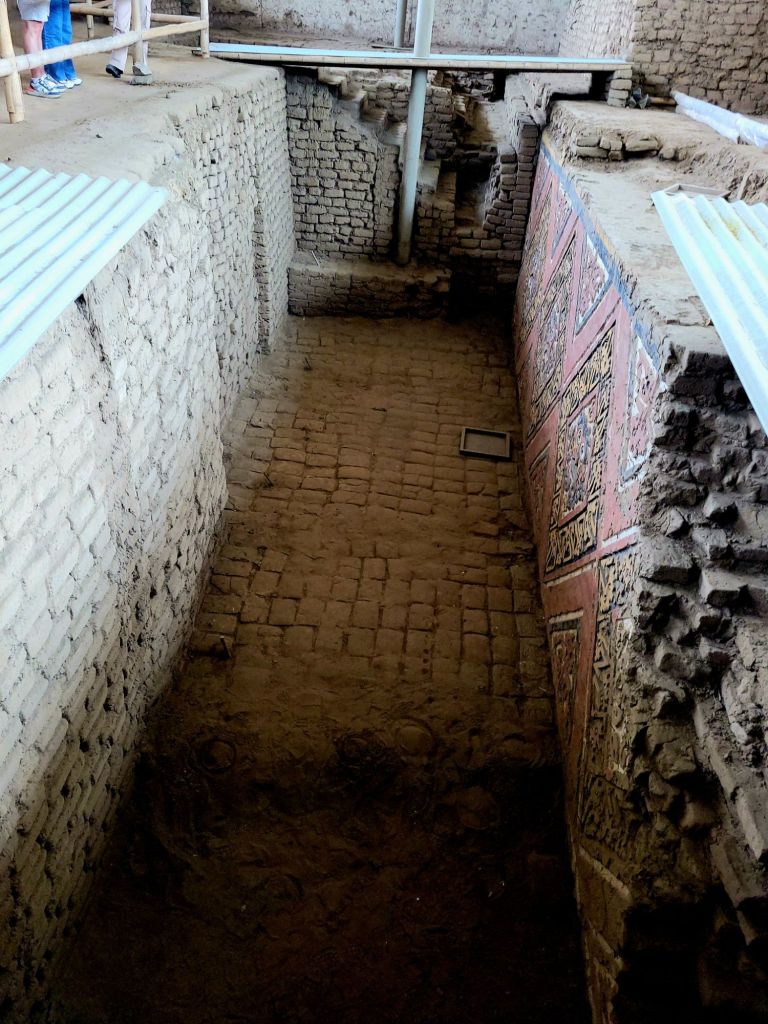
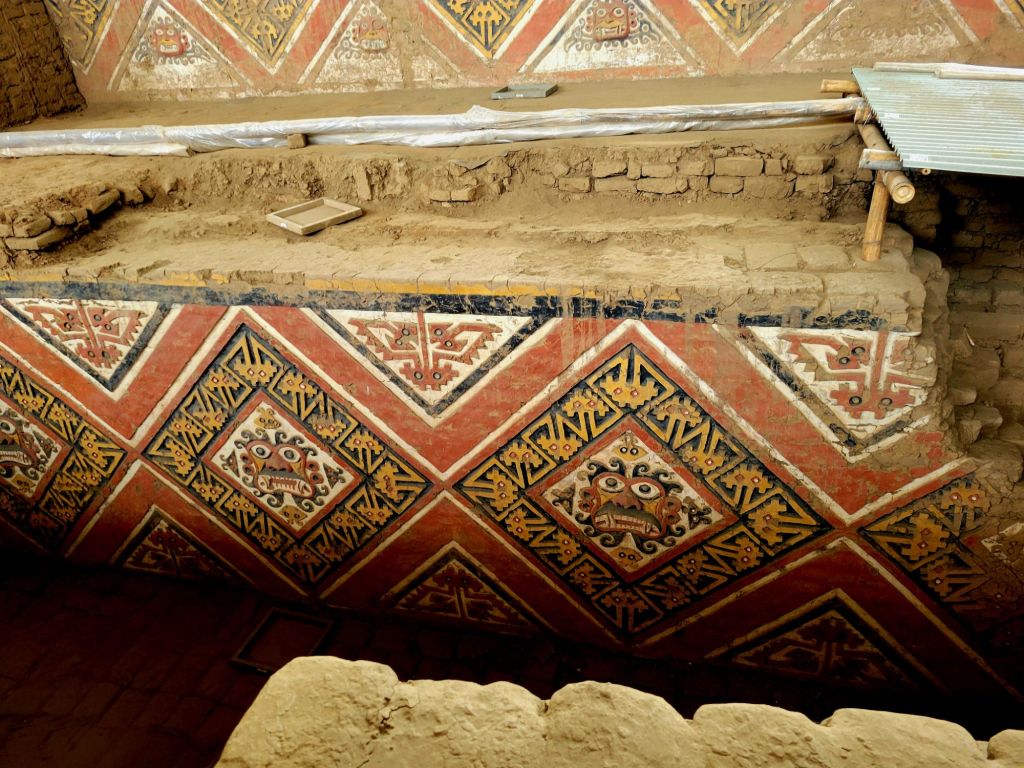
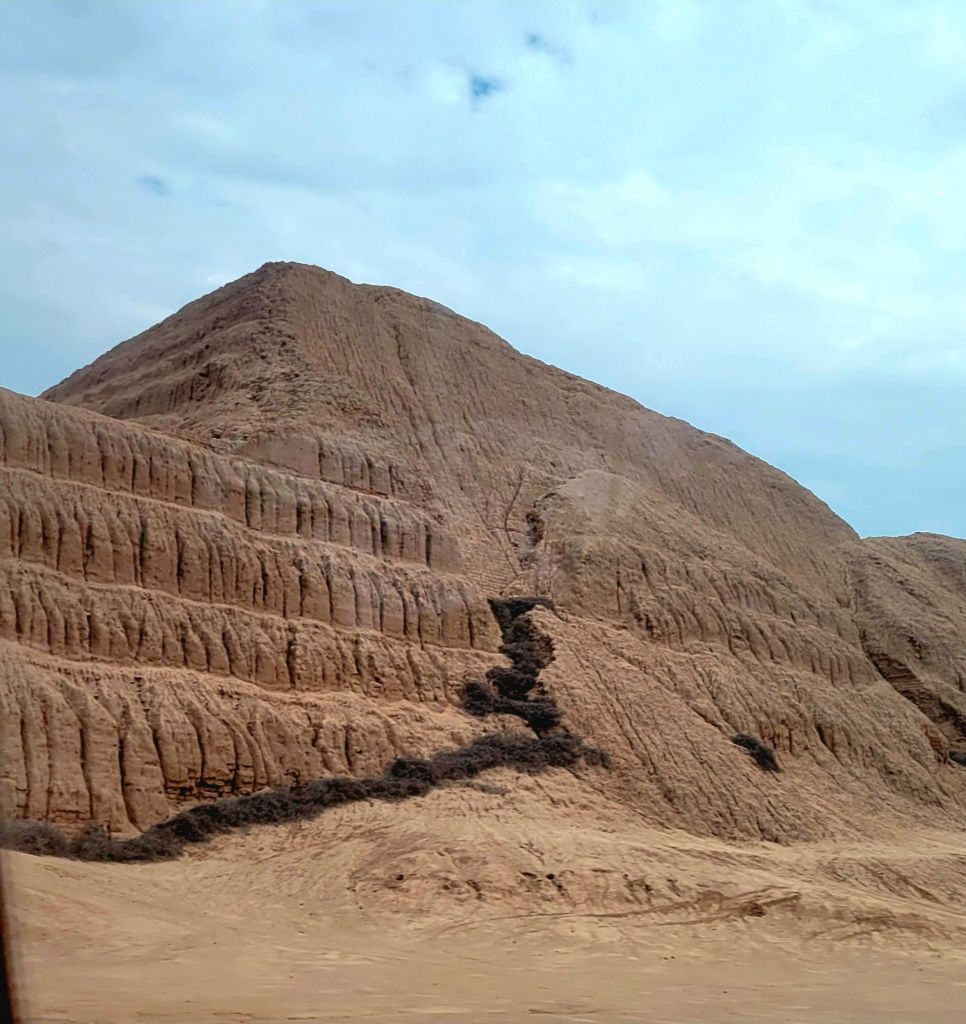
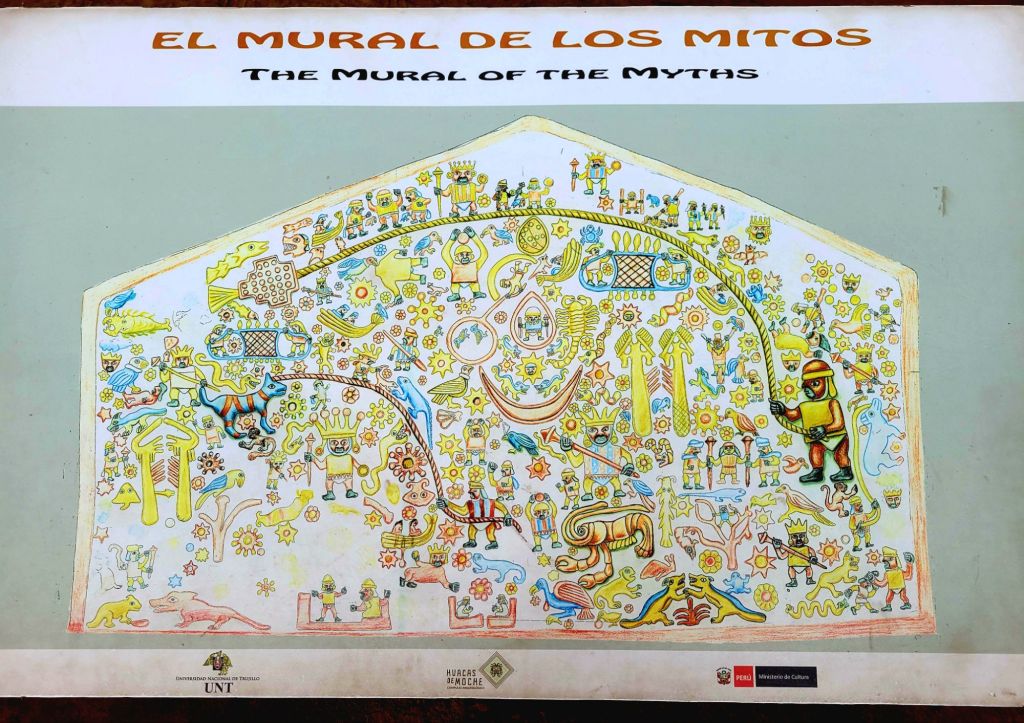
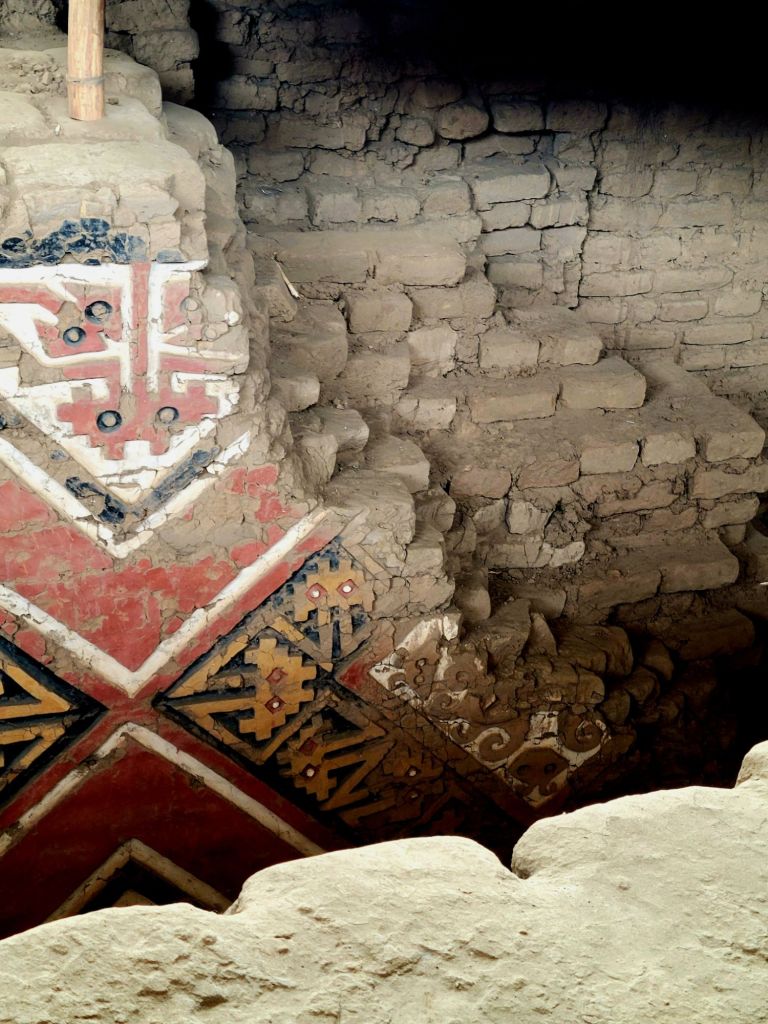
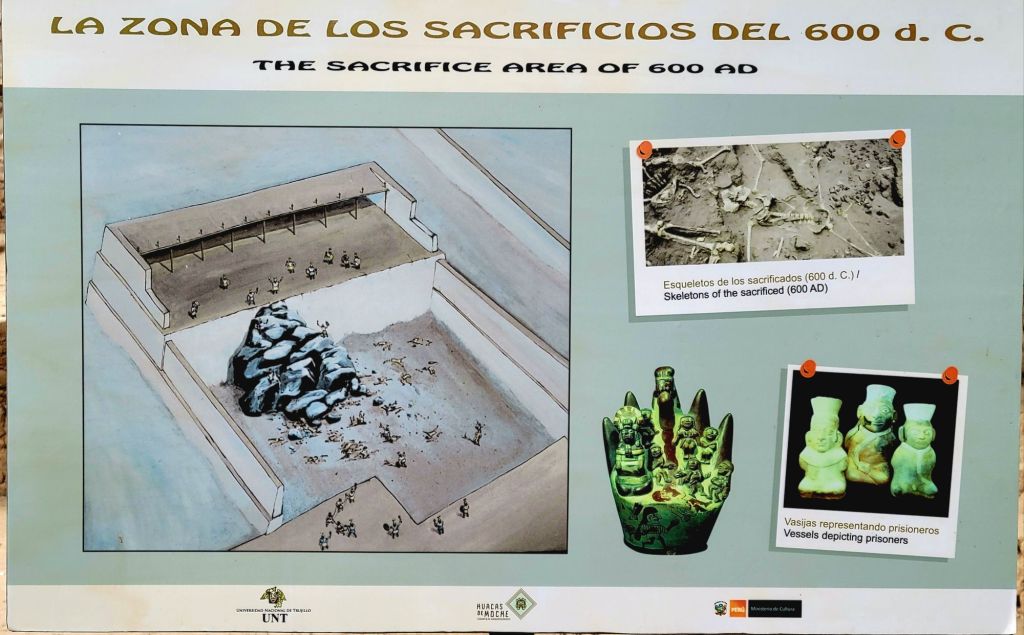
The Huaca de la Sol, Temple of the Sun…this temple is believed to be the largest adobe building in the Americas! Its construction used around 140 million of adobe bricks. People like to say that it was built in only 3 days by 250,000 men. Its size is colossal: 1,132 feet long, 525 feet wide and 98 feet high. Unfortunately, the Temple of the Sun has suffered a lot because of the weather as you can see, so we could only see the outside because visitors were not permitted. The Temple of the Moon footprint is being attended to with shelter devices and the excavation is massive and amazing. There are 5 levels, each one being built every 100 years, and each one outside of the previous one. There is a large area between the temples, and this is where the people lived. The Temple of the Sun was used mostly for commerce and government, whereas the Temple of the Moon was used for ceremonies and sacrifices. It is a bit of a hike, but definitely worth it.
.













 Suzi Travels
Leave a comment